No. 14, Building 2, No. 367 Beijing Road, Chengdu Economic and Technological Development Zone (Longquanyi District)
Choosing the right Fine Mesh manufacturer can shape product quality, operating costs, and delivery reliability. Global buyers often compare suppliers by price first. That approach can create expensive problems later. A low quotation may hide inconsistent wire diameter, weak welds, or limited technical support.
This guide reviews 10 leading Fine Mesh manufacturers for international purchasing teams. The selection focuses on manufacturing experience, material control, production capacity, inspection methods, and export performance. Common materials include stainless steel, brass, copper, and specialized alloys. Practical details matter, such as aperture tolerance, roll width, edge finish, packaging, and sample availability. A reliable manufacturer should explain these points clearly and provide traceable quality records.
Certifications also deserve careful attention. Buyers should confirm whether documents match the actual factory, product grade, and destination requirements. Independent testing may be necessary for demanding applications. Site audits, trial orders, and reference checks can reveal more than polished brochures. Nothing is perfect.
The ranking is not a universal verdict. A supplier suitable for filtration may not serve architectural, laboratory, or industrial screening needs equally well. Production scale can also affect flexibility. Larger factories may offer stronger capacity, while smaller specialists may provide closer engineering support. This comparison aims to give purchasing managers a practical starting point, not a substitute for due diligence. Each manufacturer should be evaluated against real specifications, expected volumes, delivery schedules, and long-term service needs. Good decisions come from evidence, not attractive promises.
Fine mesh is a woven or welded screen with very small openings.
Its performance depends on aperture size, wire diameter, weave pattern, and material grade. A 100-mesh screen does not always perform like another 100-mesh screen. Actual opening size can change with wire thickness and manufacturing tolerance.
Global buyers use fine mesh for filtration, screening, guarding, and controlled airflow.
In food processing, it can separate small particles from powders. In laboratories, it may support careful sample preparation. In industrial equipment, it can protect valves, sensors, and ventilation paths from contamination. The right choice depends on the medium, pressure, temperature, corrosion exposure, and cleaning method. Smaller openings are not enough.
Specification errors are expensive.
Buyers should request aperture data, wire diameter, material composition, roll width, length, and inspection records. Sample testing matters when a screen must fit an existing frame. A common mistake is ignoring open-area requirements while comparing mesh counts.
Packaging also deserves attention. Moisture-resistant wrapping, firm cores, and clear labels reduce damage during long-distance transport. Not every supplier measures tension equally well. That uncertainty should be checked, not politely assumed. A small trial order can reveal curling, blocked openings, uneven welding, or inconsistent rolls before full production.
Choosing a fine mesh manufacturer requires more than comparing prices. Start by checking material grades, wire diameter, aperture tolerance, and production capacity. Reliable suppliers should provide technical datasheets and measurable inspection records. Ask how they control weaving tension, edge quality, and roll length. Small variations can affect filtration, screening, and airflow performance.
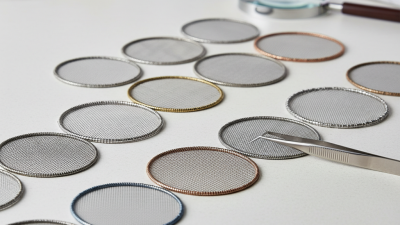
Request samples from several manufacturers before placing a large order. Examine the mesh under magnification. Look for uneven openings, broken wires, rough edges, or inconsistent finishes. A useful supplier should explain its testing equipment, sampling process, and corrective actions. Certifications can support credibility, but they should match the actual product and factory scope. Do not treat every certificate as proof of quality.
Communication also matters across international markets. Confirm packaging methods, moisture protection, labeling, shipping terms, and replacement procedures in writing. Check whether the manufacturer can maintain consistent specifications between trial and repeat orders.
Production photos and factory audits may reveal useful details, though neither replaces independent testing. I have found that clear drawings prevent more disputes than friendly promises.
Not every low-cost offer is economical. A cheaper roll may create waste during installation. Some buyers also overlook customs documentation and regional compliance requirements. That mistake can delay delivery. Compare lead times, payment safeguards, quality records, and technical support together. Even experienced buyers should leave room for doubt; a successful sample does not guarantee flawless mass production.
The 10 Leading Fine Mesh Manufacturers for Global Buyers
Selecting among the 10 leading fine mesh manufacturers requires more than comparing prices. Grand View Research estimates that the global wire mesh market was worth about USD 8 billion in 2023, with demand supported by filtration, construction, and industrial processing. Manufacturers serving international buyers should therefore demonstrate stable production capacity, traceable raw materials, and repeatable aperture control. Small deviations can affect flow rates, separation efficiency, and product safety.
Look for manufacturers offering stainless steel, nickel alloy, polyester, or other application-specific meshes. Their technical files should state wire diameter, opening size, weave pattern, tolerance, tensile strength, and surface treatment. Reports from MarketsandMarkets continue to identify filtration as a strong growth area, especially in water treatment, pharmaceuticals, food processing, and chemical production. Independent inspection records add useful confidence. So does clear sampling.
Factory experience matters. Ask for batch samples, microscope images, and test certificates before approving large orders. Confirm roll width, maximum panel length, packaging methods, and export documentation. A dependable supplier should explain how it controls weaving tension and prevents blocked openings. The details matter.
However, rankings can mislead. A large factory may still provide inconsistent communication or weak after-sales support. Smaller producers may offer better customization, but their capacity needs verification. Buyers should audit evidence, not promises, and review performance after the first shipment. That step is often neglected.
Standard fine-mesh opening sizes commonly used for international screening and filtration applications
The chart compares commonly specified mesh counts with their nominal aperture sizes in micrometres. The reference values are based on standard test sieve openings commonly used in global industrial screening, filtration, and particle-separation specifications. A higher mesh count indicates a smaller opening.
Choosing among the 10 best fine mesh manufacturers requires more than comparing catalog photos. Experienced buyers inspect wire diameter, aperture tolerance, weave consistency, and edge finishing. A reliable manufacturer should provide production samples, material traceability, and clear inspection records. Mesh made from stainless steel, nylon, or polyester performs differently in heat, filtration, and chemical environments. Samples reveal more.
Customization can include roll width, opening size, wire thickness, cut pieces, and surface treatment. Ask whether tooling charges apply to special patterns. Certifications also need careful checking. ISO 9001 supports process control, while material certificates and third-party test reports confirm actual composition and performance. A certificate alone does not guarantee a stable product. I have seen technically attractive offers fail because the supplied mesh varied between batches.
Tips: Request a small trial order before committing to large volumes. Compare aperture measurements under the same inspection method. Check packaging, moisture protection, and labeling for international shipping. Pricing should include tooling, sampling, inspection, freight, duties, and possible replacement costs. The lowest quotation may hide inconsistent tolerances or weak after-sales support. Ask for a written specification sheet, production lead time, minimum order quantity, and warranty terms. Keep communication documented. This feels tedious, but it prevents expensive misunderstandings.
Choosing a fine mesh supplier starts with the application, not the catalog number. Define the required aperture, wire diameter, open area, strength, and operating temperature. A mesh for powder screening may fail in a corrosive wash line. Small errors matter.
ASTM E11 provides recognized requirements for woven wire test sieve cloth, including aperture tolerances and inspection methods. Ask suppliers to state their inspection standard clearly. Request a material certificate, dimensional report, and traceable production lot. For stainless steel mesh, verify grade, surface finish, and corrosion resistance under actual process conditions. “Stainless steel” alone is too vague.
Market evidence also supports careful supplier selection. A 2024 MarketsandMarkets filtration industry report projects the global filtration market to grow at more than 7% annually through 2028. That expansion increases supplier choices, but not necessarily supplier quality. Compare sample consistency, not only quoted prices. Check whether the supplier tests mesh tension, edge quality, and aperture distribution before shipment. Ask for retained samples from the same lot. It is a practical safeguard.
A lower price can look efficient. It may be a false economy. Suppliers should explain lead times, packaging, replacement support, and nonconformance handling in writing. Video inspections can help, but they cannot replace physical testing. I would also challenge one common assumption: a tighter mesh is not always better. It can reduce flow, clog faster, and increase cleaning demand. Choose the supplier that can prove fitness for your process, batch after batch.
| Rank | Supplier Profile | Primary Region | Typical Mesh Materials | Typical Aperture Range | Available Weave Types | Common Product Forms | Typical Width Range | Quality Documentation | Best-Fit Applications | Typical Lead Time | Application-Fit Score |
|---|---|---|---|---|---|---|---|---|---|---|---|
| 01 | Precision stainless-steel mesh specialist | East Asia | 304 and 316 stainless steel | 20–500 µm | Plain, twill, Dutch, reverse Dutch | Rolls, discs, cut sheets, filter elements | 0.5–1.6 m | Mill certificates, dimensional inspection, batch traceability | Pharmaceutical filtration, laboratory sieving, polymer filtration | 3–6 weeks | 9.5/10 |
| 02 | High-temperature alloy mesh manufacturer | Western Europe | 304, 316L, nickel alloys, heat-resistant stainless steel | 25–1,000 µm | Plain, twill, Dutch, welded support mesh | Rolls, formed screens, filter packs, custom assemblies | 0.3–1.5 m | Material certificates, heat-treatment records, test reports | Thermal processing, aerospace filtration, chemical equipment | 5–8 weeks | 9.3/10 |
| 03 | Fine woven mesh producer for laboratory use | North America | Stainless steel, nickel, polyester, nylon | 15–1,000 µm | Plain, twill, square opening | Test sieves, discs, sheets, small rolls | 0.2–1.2 m | Opening-size reports, sieve calibration, inspection records | Particle analysis, research laboratories, analytical testing | 2–5 weeks | 9.1/10 |
| 04 | Food and beverage screening mesh supplier | South Asia | 304 and 316 stainless steel, food-grade synthetic fibers | 30–2,000 µm | Plain, twill, Dutch, reinforced edge | Belts, screens, filter bags, cut pieces | 0.5–2.0 m | Food-contact declarations, material certificates, hygiene records | Brewing, dairy processing, flour milling, edible-oil filtration | 3–7 weeks | 8.9/10 |
| 05 | Industrial filter-cloth and Dutch-weave specialist | Central Europe | 304, 316L, 310, 904L stainless steel | 5–300 µm | Plain Dutch, twill Dutch, reverse Dutch | Filter cloth, candle-filter elements, welded packs | 0.4–1.5 m | Permeability data, tensile testing, aperture inspection | Water treatment, petrochemicals, plastics extrusion, hydraulics | 4–9 weeks | 9.4/10 |
| 06 | Polymer fine-screen manufacturer | East Asia | Polyester, nylon, polypropylene, PTFE | 20–1,500 µm | Plain, twill, monofilament square mesh | Rolls, filter bags, discs, molded screen inserts | 0.5–3.0 m | Polymer grade data, dimensional reports, batch identification | Ink filtration, medical processing, food processing, electronics | 2–5 weeks | 8.7/10 |
| 07 | Custom punched and woven micro-screen fabricator | North America | Stainless steel, nickel, titanium, brass | 25–1,200 µm | Woven, electroformed, precision perforated | Laser-cut discs, screens, laminations, frames | Up to 1.5 m | CAD drawings, first-article inspection, dimensional reports | Sensor protection, battery components, medical devices, aerospace | 5–10 weeks | 8.8/10 |
| 08 | High-volume general-purpose mesh producer | Southeast Asia | 304 stainless steel, galvanized steel, polyester, nylon | 40–2,500 µm | Plain, twill, welded, crimped support mesh | Large rolls, sheets, cut panels, simple screens | 1.0–3.0 m | Material certificates, production inspection, packing records | General filtration, construction, agriculture, ventilation | 2–6 weeks | 8.4/10 |
| 09 | Electroformed nickel micro-mesh specialist | Western Europe | Nickel and nickel-based alloys | 5–250 µm | Electroformed square and custom apertures | Sheets, discs, masks, precision inserts | 0.1–0.8 m | Microscopic aperture inspection, thickness reports, traceability | Microelectronics, precision optics, acoustic components, sensors | 6–12 weeks | 9.0/10 |
| 10 | Reinforced mesh and filter-element integrator | Middle East and South Asia | 316L stainless steel, 304 stainless steel, sintered metal | 10–800 µm | Woven laminate, sintered laminate, Dutch weave | Multi-layer discs, cartridges, cones, pressure screens | 0.3–1.2 m | Pressure-drop testing, burst testing, material certificates | Oil and gas, polymer processing, industrial water filtration | 4–10 weeks | 9.2/10 |