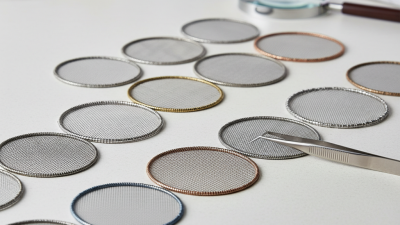
Best Fine Mesh Solutions for Your Global Sourcing Needs?
In today's global marketplace, sourcing high-quality materials is vital for success. Fine Mesh solutions play a crucial role in various industries, from food processing to pharmaceuticals. Renowned expert Dr. Emily Wright, who has over 15 years of experience in filtration technologies, emphasizes, "Choosing the right fine mesh can significantly enhance product quality."
Fine Mesh materials are essential for achieving precise filtration and separation. However, not all suppliers meet the rigorous standards needed for industrial applications. The challenge lies in finding a dependable partner who can deliver consistent quality. This often leads to reflections on past sourcing decisions and potential missteps.
Despite the growing demand for Fine Mesh solutions, the industry faces hurdles. Many businesses overlook the importance of mesh sizing and material type, which can affect performance. Rethinking sourcing strategies and focusing on quality over cost can lead to better outcomes. The right Fine Mesh supplier can make a profound difference in operational efficiency and product integrity.

Understanding Fine Mesh Materials and Their Applications
Fine mesh materials are crucial in various industries, including food processing, pharmaceuticals, and chemical manufacturing. These materials provide effective filtration solutions and particle separation. According to a recent report by the Filtration Society, the global fine mesh market is projected to grow by 5.2% annually, driven by increasing demand for high-quality filtration.
Common applications of fine mesh include sieving powders in food production and filtering liquids in pharmaceutical processes. Materials like stainless steel, nylon, and polyester are popular due to their durability and resistance to corrosion. Understanding the right mesh size is vital. A finer mesh can trap smaller particles, but it also may slow down processing times.
**Tip:** When selecting fine mesh, consider the balance between filtration efficiency and flow rate. Different applications may require different mesh materials and sizes to optimize performance.
Even within this specialized field, challenges exist. Equipment wear and tear can alter mesh performance. Regular inspection and maintenance practices are essential for ensuring optimal efficiency and reliability.
**Tip:** Document your mesh performance data. This information will help identify trends and potential issues before they impact operations.
Best Fine Mesh Solutions for Your Global Sourcing Needs
| Material Type |
Mesh Size (Microns) |
Common Applications |
Advantages |
| Stainless Steel |
5 - 500 |
Filtration, sieving, and food processing |
Corrosion resistance, durability |
| Polyester |
25 - 300 |
Screen printing, filter bags |
Lightweight, chemical resistance |
| Nylon |
10 - 300 |
Food & beverage filtering, paint spraying |
Flexibility, elasticity |
| Bronze |
15 - 400 |
Architectural applications, screens |
Aesthetic appeal, anti-corrosive properties |
| Fiberglass |
30 - 400 |
Window screening, industrial filtration |
UV resistance, lightweight |
Key Factors to Consider in Global Sourcing of Fine Mesh Solutions
When considering global sourcing of fine mesh solutions, several key factors come into play.
Quality is paramount. According to a recent industry report,
70% of sourcing failures stem from inadequate material quality. Fine mesh must meet strict filtration standards.
A careful assessment of supplier capabilities is necessary to avoid costly compromises.
Cost-effectiveness also warrants attention. The global market for fine mesh solutions is projected to exceed $1 billion by 2025.
However, choosing the cheapest options can lead to subpar performance. Consider total cost of ownership, which includes maintenance and durability.
Balancing initial investment with long-term value is crucial.
Supply chain reliability is another essential consideration. Delays can disrupt production schedules.
In fact, 40% of companies experience setbacks due to unreliable suppliers.
It's vital to evaluate suppliers based on their delivery history and communication.
Transparency in the sourcing process builds trust and strengthens partnerships.
Top Manufacturers and Suppliers for Fine Mesh Products Worldwide
Fine mesh products are essential across various industries such as pharmaceuticals, food processing, and manufacturing. Leading suppliers globally emphasize their commitment to high-quality materials and innovative designs. The growing demand for fine mesh solutions is evident in recent industry reports, which predict a market growth of 5.2% annually until 2027. This trend highlights the importance of selecting the right manufacturer to ensure quality and reliability.
Many manufacturers focus on enhancing filtration efficiency and durability. However, some suppliers still face challenges in maintaining consistent quality standards. A critical review of supplier performance can reveal gaps in production control. It’s essential for businesses to pay attention to manufacturing processes. Reports indicate that up to 30% of fine mesh products may not meet industry specifications, a statistic that should prompt caution.
In a global market, the diversity of suppliers offers opportunities and risks. Some regions are recognized for their expertise, particularly in Asia and Europe, where advanced technologies are employed. Yet, barriers such as tariffs and shipping delays can impact sourcing decisions. Companies must thoroughly vet and assess their suppliers to mitigate these issues. Engaging with suppliers who provide transparency in their production processes can lead to a more reliable sourcing strategy.
Comparative Analysis of Fine Mesh Technologies and Features
Fine mesh technology plays a crucial role in various industries, from pharmaceuticals to food processing. Each type of fine mesh offers unique benefits. Some materials provide better filtration, while others excel in durability. Understanding these features can make a significant difference in global sourcing decisions.
When comparing fine mesh solutions, consider the specific needs of your application. For instance, certain meshes may withstand chemical exposure better than others. However, these durable options might be heavier or more expensive. Analyzing these trade-offs requires expertise and careful consideration. Always question whether the chosen technology meets the project's demands without unnecessary costs.
Additionally, innovations in fine mesh technology continue to emerge. Some newer materials claim enhanced performance but may lack empirical testing. Relying solely on marketing can lead to misjudgments. It's essential to prioritize verified data and real-world use cases when selecting a fine mesh solution. This approach ensures reliability and efficiency in your global sourcing efforts.
Best Practices for Quality Control in Fine Mesh Sourcing
When sourcing fine mesh materials, quality control is crucial. Begin by establishing clear specifications. Specify the mesh size, material type, and intended use. These criteria guide manufacturers and help avoid misunderstandings. Regularly reviewing these specifications is essential. Sometimes, they may not align with the end-use requirements.
Next, during production, conduct in-process quality checks. This ensures that the mesh meets the set requirements at various stages. Random sampling methods can help gauge quality without disrupting production. However, be aware that these methods can sometimes miss subtle defects. Yet, they are often more effective than no checks at all.
Post-production, perform comprehensive testing of the final products. Test for durability, resistance, and performance metrics. Document every step of this process. While it may seem tedious, proper documentation builds a reliable reference for future sourcing decisions. Remember to reflect on your findings. Analyzing failures or discrepancies can lead to improved practices in future sourcing efforts.
 No. 14, Building 2, No. 367 Beijing Road, Chengdu Economic and Technological Development Zone (Longquanyi District)