What is Fine Mesh and How Can It Benefit Your Business?
In today’s competitive landscape, understanding the advantages of Fine Mesh can truly set your business apart. Industry expert Dr. Emily Stanton, a leading voice on filtration technology, states, "Fine Mesh is not just a product; it’s a solution for efficiency." This reflects the growing recognition of Fine Mesh across various sectors.
Fine Mesh refers to highly precise filtration materials designed to meet diverse operational needs. Organizations can greatly benefit from its ability to enhance product purity. It allows for the effective removal of impurities while retaining desired elements. Such capabilities can boost production quality and reduce waste.
Yet, many businesses overlook the importance of Fine Mesh in their processes. Choosing the right mesh size and material isn’t always straightforward. Companies may rush decisions, leading to inefficiencies. Therefore, a deeper understanding is essential. An informed approach can turn Fine Mesh from a simple tool into a vital asset for any organization.

What is Fine Mesh? Definition and Characteristics
Fine mesh is defined as a finely woven screen or filter. It features small openings that effectively separate particles based on size. The characteristic of fine mesh allows it to be utilized in various industries. This includes food processing, pharmaceuticals, and manufacturing. It provides precision when sifting, filtering, or screening materials.
Its benefits are significant. Fine mesh can enhance product quality by preventing unwanted contamination. This is crucial in industries where purity is paramount. Additionally, fine mesh can improve operational efficiency. Using it can lead to reduced waste and higher accuracy in production. However, relying solely on fine mesh may not always solve all issues. Sometimes, clogging can occur with certain materials. This requires careful consideration during the selection process.
Choosing the right mesh size is essential. It is important to assess the specific needs of your business. The right balance can lead to optimal results. Therefore, evaluating your processes will help you determine the best approach. Fine mesh can offer many advantages, but it must be used thoughtfully.
What is Fine Mesh and How Can It Benefit Your Business?
| Characteristic |
Description |
Business Benefits |
| Particle Size |
Typically ranges from 5 to 500 microns |
Improves filtration and separation processes |
| Material |
Made from stainless steel, nylon, or polyester |
Durable and resistant to wear and chemicals |
| Applications |
Used in food processing, pharmaceuticals, and wastewater treatment |
Versatile use across industries enhances operational efficiency |
| Mesh Type |
Available in woven and non-woven forms |
Allows customization for specific application needs |
| Cost |
Varies based on material and manufacturing process |
Potential for cost savings in long-term operations |
Applications of Fine Mesh in Various Industries
Fine mesh products are increasingly crucial across multiple industries for their unique capabilities. In the food processing sector, for example, fine mesh screens are vital for sieving flour or sugar. This ensures consistency in texture and quality. Reports indicate that 85% of companies experience improved efficiency when utilizing fine mesh in their operations.
In the pharmaceutical industry, the application is equally significant. Fine mesh aids in the filtration of compounds, leading to higher purity levels. A study showed that the right mesh size can enhance drug formulation by 30%, reducing production time and costs. However, some challenges exist. Overlooking mesh maintenance can lead to contamination, affecting product integrity.
Moreover, in the chemical processing field, fine mesh filters enable the separation of complex mixtures. While effective, there are concerns about durability and clogging. Regular assessments and adjustments are necessary to maintain performance. Integrating fine mesh technology requires ongoing reflection on capacity and operational needs to fully leverage its benefits.
Advantages of Using Fine Mesh for Businesses
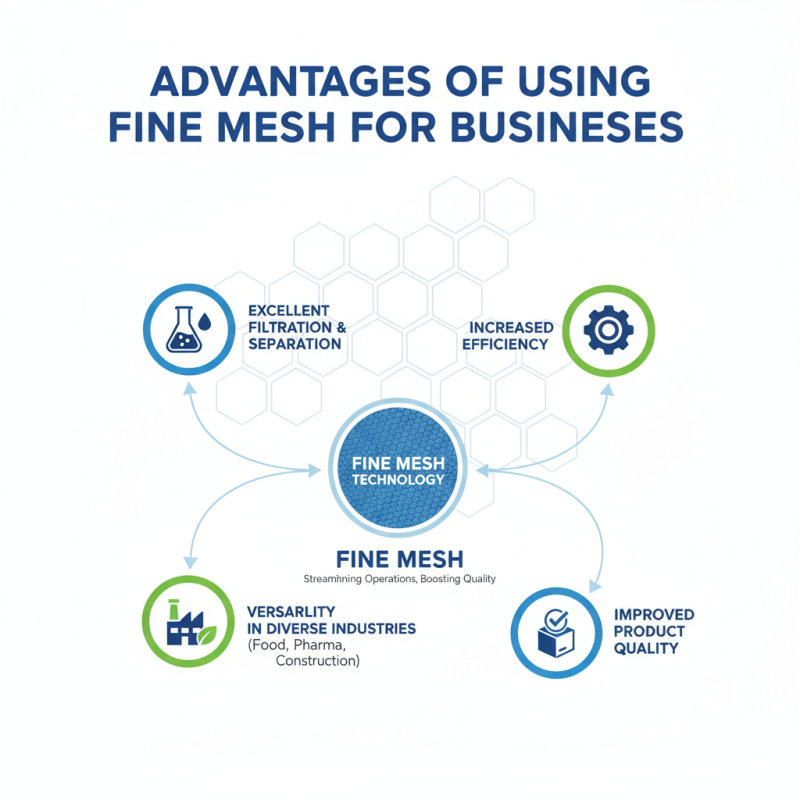
Fine mesh has gained popularity in various industries, offering numerous benefits to businesses. This material features tightly woven fibers, allowing for excellent filtration and separation processes. Its versatility enhances operations in sectors like food processing, pharmaceuticals, and construction. With fine mesh, companies can improve product quality and increase efficiency.
Using fine mesh can lead to significant cost savings. Businesses experience reduced waste due to better separation of materials. For instance, in food processing, fine mesh ensures contaminants are removed. This not only safeguards consumer health but also complies with regulatory standards. A meticulous approach to quality control enhances a brand's reputation and fosters customer loyalty.
**Tip:** Regularly inspect your fine mesh screens for wear and tear. Damaged mesh can compromise filtration quality.
Another advantage is the ease of maintenance. Fine mesh products are often easy to clean, helping to maintain hygiene standards. Businesses can streamline operations with less downtime for cleaning. Consistent upkeep can prevent costly replacements and improve long-term performance.
**Tip:** Create a cleaning schedule to ensure regular maintenance. This prevents buildup and prolongs the mesh's lifespan. Regular inspections can be a game-changer.
How to Choose the Right Fine Mesh for Your Needs
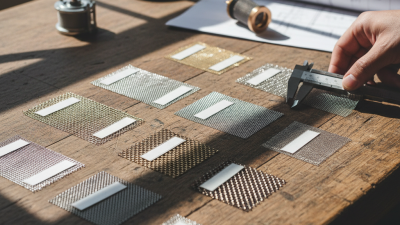
When choosing fine mesh, consider your specific needs carefully. Different applications require different mesh types. Think about what materials you will filter. The size of the particles matters. A finer mesh captures smaller particles, which can be essential in industries like food processing and pharmaceuticals.
Evaluate the mesh material as well. Stainless steel is durable, but nylon is lighter and less expensive. Assess your environment. Will the mesh face high temperatures or harsh chemicals? These factors significantly influence your choice. Keep in mind that the perfect option may not exist. A mesh that works well in one setting might fail in another.
Additionally, don’t underestimate the importance of mesh opening shape. Square openings may provide even filtration, while rectangular ones might suit specific needs better. Testing and feedback from your team can reveal gaps in your current setup. Assessing mesh choices can be a complex process. Staying flexible and willing to iterate on your choices will yield better results.
Fine Mesh Types and Their Applications
This chart illustrates the different types of fine mesh and their respective applications in various industries. Stainless steel mesh has a higher demand due to its durability and resistance to corrosion, whereas nylon and polyester follow, serving in lighter applications.
Maintenance and Care Tips for Fine Mesh Products
Fine mesh products are essential in various industries for
filtering,
sieving, and
separating materials.
Proper maintenance of these products can enhance their lifespan.
According to a report by the Industrial Fabrics Association International,
the right care can boost the durability of fine mesh by up to 30%.
When handling fine mesh items, avoid exposing them to harsh chemicals.
Instead, opt for mild detergents
and warm water. This simple choice can prevent degradation and rust.
Ensure you dry the mesh thoroughly after washing to avoid moisture build-up,
which can lead to mold and deterioration.
Storage also plays a vital role. Keep fine mesh in a
dry and ventilated area.
Avoid folding them, as creases may weaken the structure over time.
Regular inspection is crucial. Look for any signs of wear.
Early detection can save costs related to replacement or repair.
Embracing these maintenance tips can lead to better performance
in various business operations.
 No. 14, Building 2, No. 367 Beijing Road, Chengdu Economic and Technological Development Zone (Longquanyi District)