No. 14, Building 2, No. 367 Beijing Road, Chengdu Economic and Technological Development Zone (Longquanyi District)
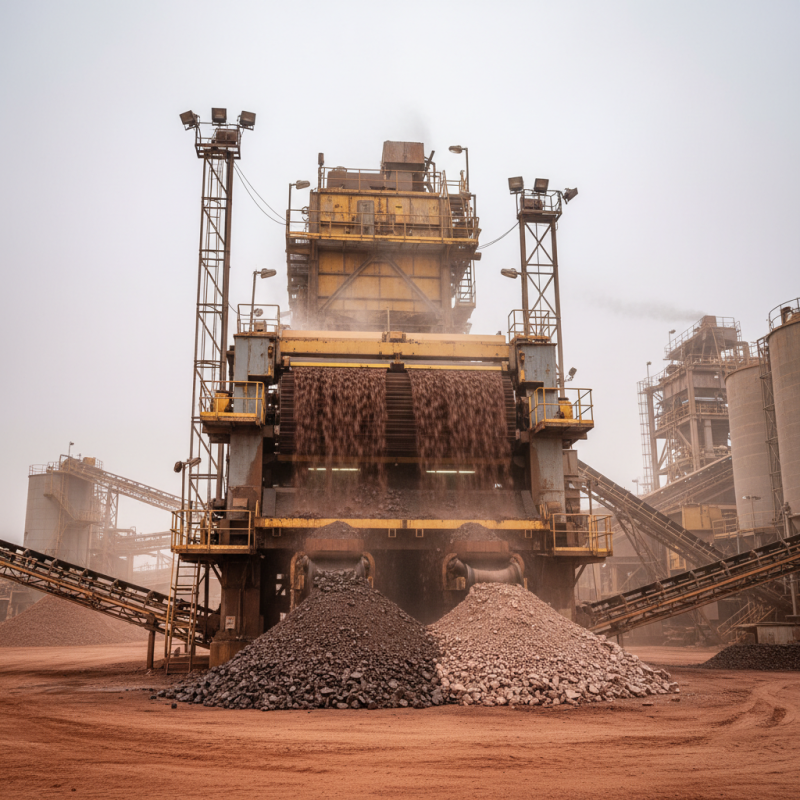
Iron Ore Screening plays a crucial role in the mining process. Efficient screening ensures better separation of valuable iron ore from waste materials. However, challenges exist in achieving optimal screening performance.
Many variables affect Iron Ore Screening efficiency. Particle size, moisture content, and material type all influence results. These factors often lead to unexpected outcomes. Equipment selection also impacts performance. Choosing the wrong screen configuration can reduce effectiveness.
Identifying these issues is the first step. Operators must regularly assess and adapt their processes. Continuous reflection on techniques will improve overall operations. There is no one-size-fits-all solution in this complex field. Adopting innovative methods is essential for enhancing Iron Ore Screening efficiency.
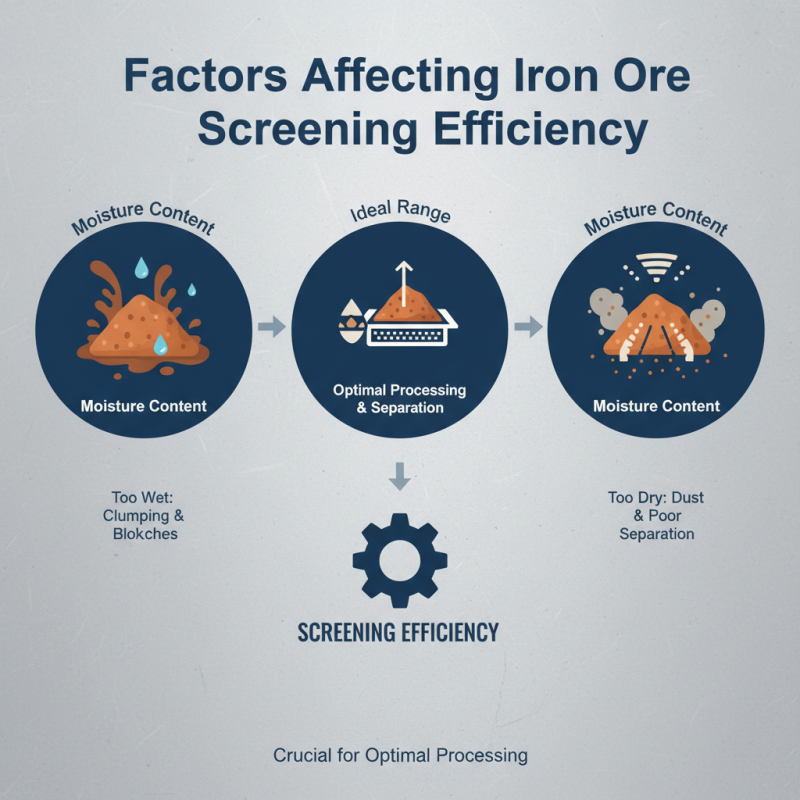
Iron ore screening efficiency is crucial for optimal processing. Several factors influence this efficiency. One key factor is the moisture content of the ore. If the ore is too wet, it can clump together, causing blockages. Conversely, excessively dry ore can lead to dust issues and affect the quality of the separation.
Screen size is another important element. Larger openings may allow quicker throughput but can lead to a loss of fine material. Smaller openings capture more fines but can reduce flow rates. Finding the right balance is essential for effective operation. It's not uncommon to see operators struggling with screen clogging, which affects both productivity and material quality.
Tips: Always monitor the material flow on screens closely. Regular maintenance of the screening equipment can prevent unexpected breakdowns. Experimenting with different screen configurations may uncover better options. Additionally, weigh the pros and cons of limiting moisture content versus operational challenges with dust and clumping. Evaluating these factors can lead to better decisions in optimizing screening performance.
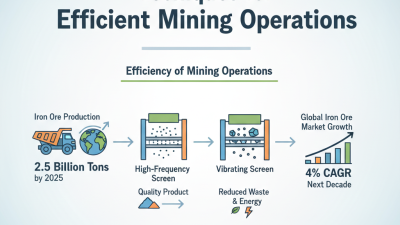
In recent years, iron ore screening has seen significant advancements. No longer do we rely solely on traditional methods. New technologies offer better efficiency and accuracy in sorting. For instance, vibrating screens and high-frequency screening devices are becoming more common. They enhance performance by increasing throughput while reducing energy use.
However, with these advancements come challenges. Equipment maintenance can become more complex. Operators must be well-trained to handle new machinery. Furthermore, not all facilities can afford such upgrades. Budget constraints are a real concern for many. It's crucial to evaluate whether the investments will yield sufficient returns.
Automation is another area of focus. Automated systems can monitor material flow in real-time. This reduces the likelihood of human error, but systems aren’t foolproof. Misalignments and software glitches can disrupt operations. Choosing the right technology requires careful consideration of specific needs. Each facility has unique requirements that demand tailored solutions.
Regular maintenance of screening equipment is crucial for improving iron ore screening efficiency. According to a recent industry report, poorly maintained equipment can reduce throughput by 30%. Routine inspection helps identify wear and tear, ensuring optimal performance. Check for screen wear patterns and replace screens as needed to maintain appropriate aperture sizes.
Tips for maintenance include cleaning screens frequently to avoid blinding. A clean screen allows better flow and reduces the need for vibrations. Inspect all drive components regularly. Faulty drives can lead to uneven screening, increasing the load on other parts of the system. Inadequate attention to these details can compromise efficiency and increase operational costs.
It’s essential to train operators on best practices. Operators should know the importance of adjusting the screening angle. An angle that is too steep or too flat can impact material flow. Regular operator training sessions can lead to better decision-making in real-time. Consider collecting data on equipment performance for future analysis. Establishing a maintenance log can help identify trends and areas for improvement over time.
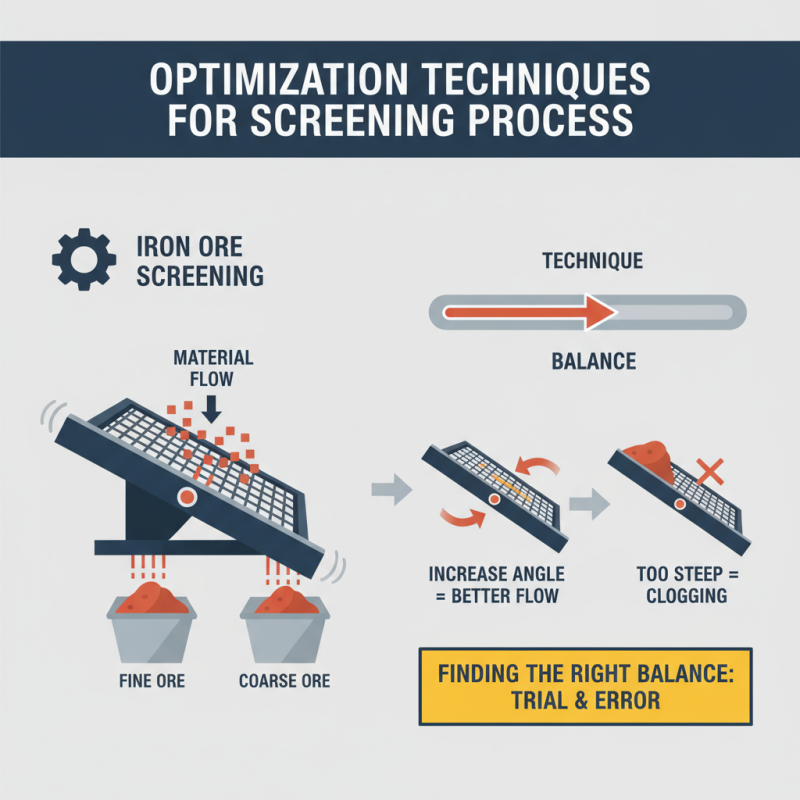
Optimizing the iron ore screening process can significantly enhance efficiency. One effective technique is to adjust the screen's inclination. A slight increase can allow for better material flow, but too steep an angle may cause clogging. Operators must find the right balance. This requires trial and error.
Another technique involves selecting the appropriate screening media. Different materials interact variably with iron ore. For instance, finer meshes might improve separation, but they also increase wear. Regular analysis of wear rates is essential to ensure longevity. Unexpectedly, some users report that their selected media perform poorly under specific conditions.
Finally, monitoring the moisture content of the ore is critical. High moisture can lead to agglomeration, resulting in inefficient screening. Implementing a dewatering step can help mitigate this issue. Additionally, staff training on the importance of continuous monitoring can yield surprising improvements. However, many still overlook this crucial aspect. Addressing these areas may require a shift in focus, but the results could be worth it.
Iron ore screening efficiency is evolving rapidly. As technology advances, new methods emerge to enhance processing. Future trends will likely focus on automation and data analytics. These innovations promise better screening processes and improved output.
To boost screening efficiency, consider implementing advanced sensors. They can provide real-time data on ore quality. This quick feedback allows for on-the-fly adjustments. Another useful tip is to analyze the particle sizes more rigorously. Inconsistencies in sizes lead to inefficient separations. Regular maintenance of screening equipment is often neglected but crucial for optimal performance.
Looking ahead, artificial intelligence will play a significant role. AI algorithms can predict equipment failures before they happen. They can also optimize screening processes based on historical data. It's essential to remain flexible and ready to adapt to these changes. Embracing new technologies, however, may require investment and training. Not every team is prepared for this shift, but those who are will gain an edge.