Iron Ore Screening Trends and Insights for Global Buyers?
Iron Ore Screening has become increasingly pivotal in the global mining industry. With the demand for high-quality iron ore rising, buyers are now more discerning. According to a report by Research and Markets, the iron ore market is projected to reach $230 billion by 2026. This growth emphasizes the necessity for efficient screening processes.
Recent trends reveal a shift towards automation in iron ore screening. Advanced technologies, such as artificial intelligence, enhance sorting accuracy and efficiency. However, some buyers remain hesitant to adopt these innovations fully. They question the initial investment and long-term benefits. A study from Grand View Research found that automated systems could increase production by up to 25% over conventional methods.
Market dynamics also play a crucial role. Fluctuations in global demand affect screening practices. Countries like China and India drive substantial iron ore consumption. This demand influences how buyers approach iron ore screening. Many are re-evaluating processes to ensure cost-effectiveness while maintaining quality. The industry must adapt continually, making iron ore screening not just a necessity, but a strategic focus.

Iron Ore Market Overview: Current Trends and Future Projections
The iron ore market is undergoing significant changes. Steel production remains a major driver of demand. In 2023, global steel output is projected to reach 1.8 billion tons. This growth impacts iron ore prices and market trends. Recently, prices have seen fluctuations, with significant declines in Q2 and modest rebounds thereafter.
Global buyers should note the increasing focus on sustainability. Green steel initiatives are rising. Some companies are investing in low-emission iron ore processing. Reports indicate that demand for high-grade iron ore is growing, as it produces less carbon dioxide during production. Projections suggest the market for premium iron ore could expand by 10% annually over the next five years.
However, there are hurdles ahead. Supply chain disruptions continue to challenge the market. Buyers might face issues sourcing quality iron ore consistently. Geopolitical tensions could exacerbate these supply challenges. Adapting to market volatility will be crucial for global buyers seeking reliable supplies. Understanding these dynamics is essential for making informed purchasing decisions.
Iron Ore Screening Trends and Insights for Global Buyers
| Region |
Current Year Production (Million Tons) |
Future Projections (Next 5 Years) |
Screening Technology Adoption (%) |
Market Demand Trend |
| Australia |
900 |
+3% annually |
85 |
Stable |
| Brazil |
400 |
+4% annually |
75 |
Increasing |
| China |
700 |
+2% annually |
90 |
Decreasing |
| India |
250 |
+5% annually |
70 |
Increasing |
| Russia |
200 |
+3% annually |
65 |
Stable |
Key Factors Influencing Iron Ore Screening Technologies
Iron ore screening technologies are evolving rapidly. They play a crucial role in the efficiency of mining operations. Buyers worldwide are increasingly focused on these advancements. Several key factors influence these technologies.
One major factor is the increasing demand for high-grade iron ore. Miners must refine their processes to segment quality materials adequately. Precision is essential in screening to reduce waste and improve yield. In this context, new methodologies are emerging. Automation is becoming more prevalent, allowing for real-time data analysis. Machines can now adjust parameters instantly based on output quality.
Environmental considerations are also driving change. Companies are under pressure to reduce their carbon footprints. Innovations in screening technology aim to lower energy consumption. Yet, these methods come with their own challenges. Initial investments can be high, which may deter some buyers. Additionally, the reliability of new equipment is sometimes in question. It becomes vital for buyers to seek out proven solutions while staying open to newer approaches.
Global Demand and Supply Dynamics Affecting Iron Ore Buyers
The global iron ore market is under significant pressure as demand and supply dynamics shift. In 2023, global iron ore production reached 2.5 billion metric tons, but challenges persist. For instance, major producing countries like Australia and Brazil face regulatory hurdles. This reduces their ability to increase output swiftly. Buyers are navigating these changes with caution.
China, the largest consumer, continues to drive demand. However, a slowdown in its construction sector has led to fluctuating prices. Recent data indicates that iron ore prices averaged $100 per ton in early 2023 but have since seen a decline to around $90 per ton. Inventory levels at Chinese ports are also rising, signaling potential oversupply. This scenario forces buyers to reconsider their procurement strategies.
Furthermore, the environmental concerns surrounding mining operations are growing. Reports show that stricter regulations in various regions could impact availability. As buyers align their sourcing strategies, they must stay attuned to these environmental policies. The ongoing changes in global supply chains and regional market shifts call for flexibility and adaptability from buyers.
Analysis of Screening Methods Used in Iron Ore Processing
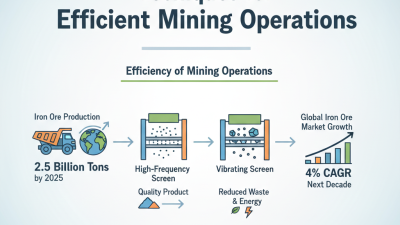
Iron ore processing relies heavily on effective screening methods. Various screening techniques ensure the efficient separation of valuable minerals from waste materials. In recent years, vibrating screens and trommel screens have gained popularity for their efficiency. Vibrating screens operate by utilizing motion, which facilitates the separation of fine from coarse particles. Their design allows for enhanced throughput in mineral processing plants.
On the other hand, trommel screens offer a different approach. They utilize rotating cylindrical structures, which allows for the effective separation of materials based on size. However, while trommel screens are effective, they can face limitations in processing speed. This can lead to bottlenecks, particularly in high-demand processing environments.
Analyzing screening trends highlights the importance of adapting technology to specific project needs. Many buyers seek innovative solutions to maximize output while minimizing waste. Yet, choosing the best screening method requires deep understanding and experience. Misunderstanding project requirements can lead to costly mistakes. Exploring options and learning from past decisions is crucial in the evolving landscape of iron ore processing.
Iron Ore Screening Methods Used in Global Processing
Impact of Environmental Regulations on Iron Ore Screening Practices
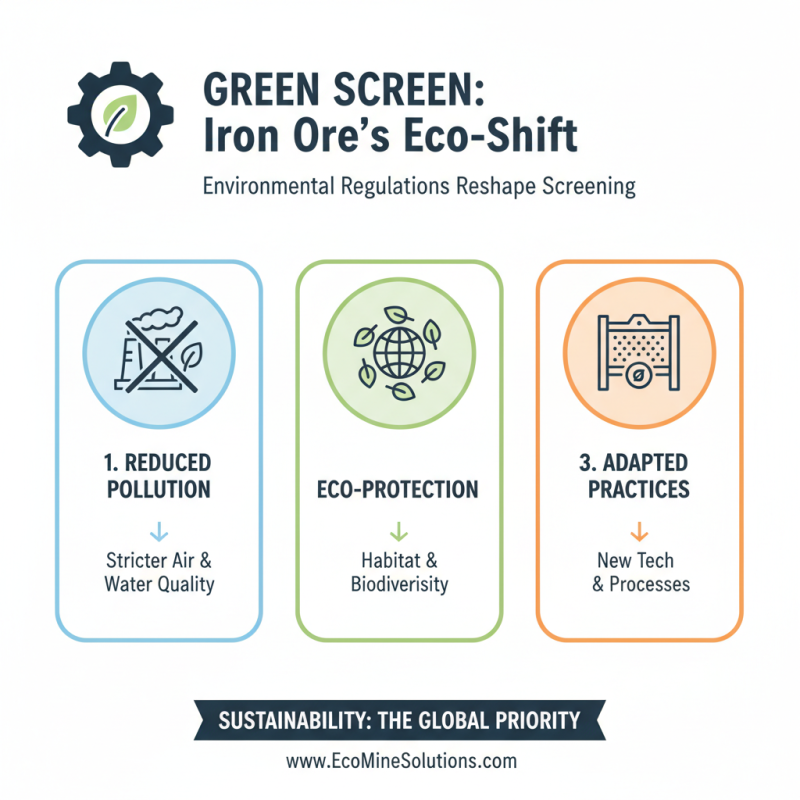
Environmental regulations are reshaping the iron ore screening industry. As sustainability becomes a global priority, companies are adapting their practices. Stricter regulations aim to reduce pollution and protect ecosystems. This shift is affecting how iron ore is screened and processed.
For instance, new technologies are emerging to meet these regulations. Automated systems now help in minimizing dust emissions during screening. These systems are not just efficient; they also align with environmental goals. However, implementing such technologies can be costly. Smaller companies face challenges in upgrading their equipment.
Additionally, while tougher regulations promote eco-friendly practices, they can lead to increased operational strain. Companies must balance compliance with cost efficiency. There’s a need for ongoing training on environmentally responsible practices. The complexity of regulations can be daunting, impacting productivity. Adapting to these changes is essential but requires thoughtful reflection and planning.
 No. 14, Building 2, No. 367 Beijing Road, Chengdu Economic and Technological Development Zone (Longquanyi District)