No. 14, Building 2, No. 367 Beijing Road, Chengdu Economic and Technological Development Zone (Longquanyi District)

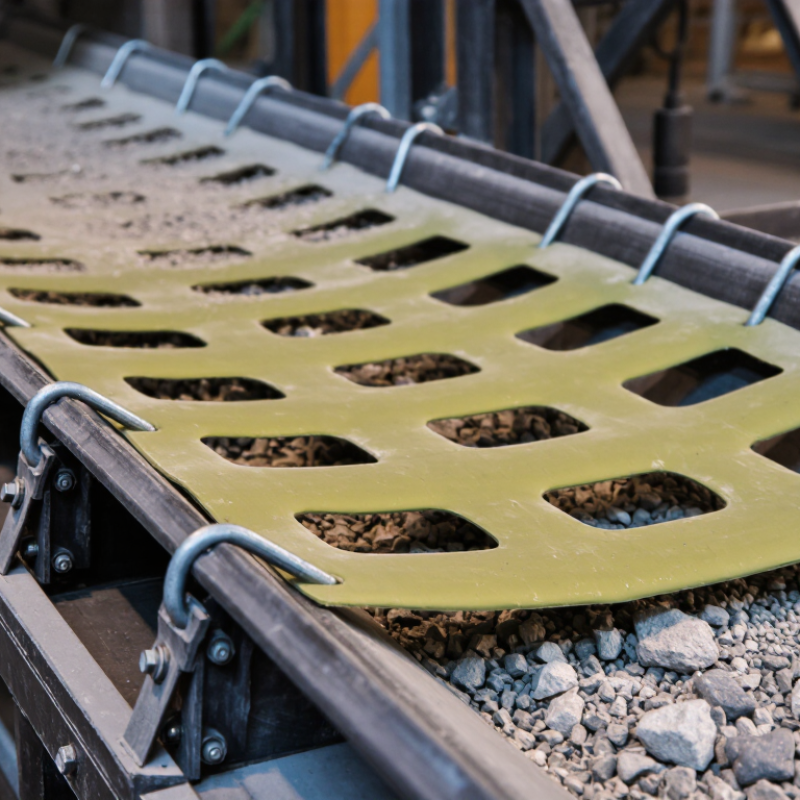
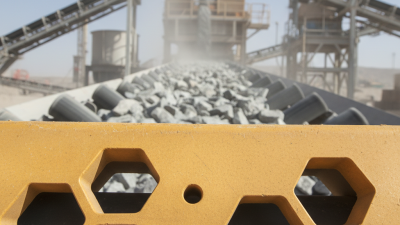
An Mdi Pu Tension Screen is a screening panel designed to separate materials by size. It commonly uses polyurethane molded with MDI-based chemistry. The result is a flexible, wear-resistant surface for demanding screening conditions. You may see these screens in aggregate plants, mining operations, and recycling facilities.
The working principle is simple, but the details matter. Tensioning bars or hooks hold each panel tightly across the screen deck. Vibrating movement then carries feed material over the surface. Smaller particles pass through the openings, while larger pieces continue toward the discharge end. The polyurethane panel absorbs repeated impact and reduces noise compared with many steel alternatives.
It is not a magic solution.
A suitable aperture, panel thickness, and tension level must match the application. Wet, sticky feed can behave differently from dry crushed stone. Excessive tension may damage the panel or supporting structure. Insufficient tension can create movement, blinding, or uneven wear. These problems are easy to overlook during installation.
In practice, reliable selection starts with measurable information. Review feed size, moisture, abrasiveness, throughput, and vibration settings. Ask the manufacturer for test data and installation guidance. Field experience also matters, because two plants with similar materials may produce different results. A Mdi Pu Tension Screen can improve service life and screening stability, but only when its design fits the entire machine. Performance should be checked over time, not judged from the first shift.
MDI PU means polyurethane made with methylene diphenyl diisocyanate. During production, MDI reacts with polyols and chain extenders. This creates strong urethane bonds and controlled crosslinking. The result is an elastic material with useful resistance to abrasion, impact, oils, and moisture. Its chemistry can be adjusted for different screening conditions.
Hardness matters, but it does not tell the whole story. Many industrial screens use polyurethane around 80–95 Shore A, depending on the application. Softer grades can absorb impact and reduce noise. Harder grades may resist sharp, abrasive particles better. Hardness alone can mislead. Tear strength, resilience, temperature, and chemical exposure also affect service life.
An MDI PU tension screen is stretched inside a support frame. Tension keeps the panel stable while vibration moves material across its surface. Carefully formed apertures separate particles by size. In field inspections, uneven tension often causes premature wear near the hooks or edges. Correct panel dimensions and balanced installation are essential. Designers should also consider feed size, moisture, throughput, and cleaning access. A screen that performs well in dry stone may behave differently with wet, sticky material. Small design assumptions can become expensive problems.
MDI PU means polyurethane made with methylene diphenyl diisocyanate. Its combination of elasticity, abrasion resistance, and typical Shore A hardness levels around 70–95 makes it suitable for tensioned screening panels.
The chart shows representative nominal aperture sizes used for different screening duties. Fine separation commonly uses smaller openings, while scalping and heavy-duty screening use larger openings. Actual aperture selection depends on feed size, moisture, load, and the required separation cut.
An MDI PU tension screen uses molded polyurethane panels stretched across a screening frame. Its openings commonly range from 10 to 100 mm, matching applications from fine aggregate separation to coarse mineral sizing. The aperture controls the cut size: particles smaller than the opening pass through, while larger particles continue across the deck.
The U.S. Geological Survey reported about 1.5 billion metric tons of crushed stone production in the United States in 2023. At this scale, small screening losses can become expensive. A 25 mm aperture may separate undersize material efficiently, but wet clay can coat the opening and reduce throughput. Tension keeps the panel stable under vibration, while polyurethane resists abrasion from sharp particles better than many conventional materials.
Field practice shows that aperture size alone does not determine performance. Feed depth, vibration frequency, particle shape, and moisture also matter. ISO 17827-1 identifies sieving as a method for determining particle-size distribution, yet industrial screens face harsher conditions than laboratory tests. That difference matters.
A 10 mm opening usually demands tighter control. A 100 mm opening tolerates larger feed, but may reduce separation precision. I have found that operators sometimes select openings by habit, not by measured feed analysis. That is a weak point. Regular sampling, tension checks, and inspection of blocked apertures provide more reliable control. The best setting is not always the largest capacity.
What Is an MDI PU Tension Screen and How Does It Work?
An MDI PU tension screen uses polyurethane panels stretched across a support frame. MDI means methylene diphenyl diisocyanate, a common raw material for durable polyurethane systems. Hook edges connect the panel to side rails, while tension bolts or wedges pull it tightly across the deck. This creates a firm screening surface with controlled flexibility.
The hook-and-tension system spreads load across the entire panel. Material strikes the surface, and the tension absorbs part of the impact before stress reaches the frame. ASTM D412-based technical data for comparable polyurethane compounds commonly reports tensile strengths near 20–40 MPa and elongation values around 300–600%. These figures explain why the panel can flex without cracking under repeated vibration. It moves slightly.
Correct installation matters. Uneven bolt adjustment can create loose zones, edge lifting, or premature wear near the hooks. ISO 527 testing guidance also shows why temperature and specimen direction can influence measured polymer performance. In field inspections, worn hooks often reveal more than worn screening surfaces. The frame may remain rigid, but poor tension quietly reduces separation accuracy. It is tempting to call the system fail-safe. It is not. Regular checks should examine hook seating, bolt torque, panel stretch, and trapped material beneath the edges. A small gap can become a serious stability problem.
An MDI PU tension screen uses polyurethane molded with MDI chemistry for demanding screening duties. The panel is stretched across a screen deck and secured under controlled tension. As feed material moves across the surface, accurately sized openings separate particles by size. The elastic polyurethane body flexes under impact, then returns toward its original shape. This action can reduce pegging, blinding, and noise compared with rigid wire mesh.
The main advantage is wear resistance. PU panels often deliver three to ten times longer wear life than wire mesh, but this range is not automatic. It depends on ore hardness, moisture, particle shape, feed rate, and panel design. Sharp, abrasive rock can cut any screen. Still, PU resists abrasion, corrosion, and repeated impact exceptionally well. Its flexible surface also absorbs energy instead of allowing every impact to damage a metal wire.
Field experience shows another benefit: fewer screen changes. That can reduce maintenance exposure and lost production hours. However, poor tensioning can cause premature cracking, uneven wear, or aperture distortion. Small details matter. Check the support rails, fastening points, and tension regularly. Measure the worn openings, not only the panel thickness. A screen may look usable while separation accuracy has already declined. Results also vary between applications, so a controlled trial is wiser than relying on a brochure claim.
An MDI PU tension screen uses a polyurethane panel stretched across a support frame. MDI refers to methylene diphenyl diisocyanate, a material used in polyurethane production. The tension keeps the screen stable while vibration separates particles by size. Its performance depends on more than the mesh opening.
Screening capacity rises when feed spreads evenly across the panel. However, excessive feed can create a thick bed and reduce separation accuracy. Open area also matters. A larger open area may increase flow, but it can weaken durability if the panel becomes too flexible. Moisture creates another challenge. Damp material may stick to the apertures, causing blinding and uneven discharge. Small changes in humidity can matter.
Tips: Check moisture before operation. Keep feed depth consistent. Inspect blocked apertures often. Compare actual throughput with design figures, because field conditions rarely match laboratory tests. A practical adjustment is reducing feed rate when wet particles form visible clusters. This may lower capacity, but it can improve usable screening. Operators should also review tension regularly. Loose panels often produce vibration patterns that look acceptable but deliver poor separation. Experience helps, yet assumptions still need testing. During maintenance, record open-area condition, moisture levels, and product size. Those details make troubleshooting more reliable.
| Performance Dimension | Typical or Reference Data | How It Affects Screening | Practical Interpretation |
|---|---|---|---|
| Screen material | MDI-based polyurethane elastomer; commonly used in molded tension-screen panels | Combines elasticity, abrasion resistance, and impact tolerance | Suitable for abrasive aggregates, minerals, coal, sand, and other bulk solids when the formulation and panel design match the duty |
| Tensioning method | Panels are stretched and secured along side or end supports; tension is maintained by the screen frame and fastening system | Tension keeps the screening surface stable and helps control vibration and material travel | Correct tension is essential; under-tensioning can cause blinding, flutter, premature wear, and inaccurate separation |
| Aperture or opening size | Common cut-point openings range from approximately 0.5 mm to 25 mm, with larger openings available for specific duties | Determines the nominal separation size and influences the probability that undersize particles pass through | Choose the opening according to the required product specification, particle shape, and acceptable carryover |
| Open area | Often approximately 20%–45% for polyurethane panels; the actual value depends on aperture shape, rib thickness, and panel layout | Higher open area generally increases potential throughput and reduces the solid surface available for impact and abrasion | Use the highest practical open area that still provides the required wear life, structural strength, and separation accuracy |
| Open-area calculation | Open Area (%) = Total Aperture Area ÷ Total Panel Area × 100 | Provides a direct comparison between screen layouts with different hole shapes and panel dimensions | Do not compare open-area percentages without also considering aperture shape, material thickness, and feed characteristics |
| Screening capacity | Capacity is normally expressed as t/h or t/m²·h; no universal value applies to all MDI PU screens | Capacity rises with effective screen area, suitable open area, adequate vibration, and a favorable feed size distribution | Estimate capacity from the complete operating system rather than from the screen material alone |
| Capacity relationship | Approximate capacity is proportional to effective screening area × feed loading rate × separation efficiency | Increasing deck area or feed loading can raise throughput, but excessive loading reduces stratification and screening accuracy | Maintain an even feed distribution across the deck and avoid deep material beds at the feed end |
| Feed-bed depth | A thinner, well-stratified bed generally screens more efficiently than a deep, overloaded bed | A deep bed prevents undersize particles from reaching the apertures and increases the risk of carryover | Control feed rate, deck inclination, and vibration to promote particle stratification |
| Moisture condition | Dry, free-flowing feed normally provides the most stable screening; wet or clay-rich feed increases adhesion and agglomeration | Moisture can block apertures, form lumps, reduce effective open area, and lower separation efficiency | For damp feed, consider larger or slotted apertures, increased deck inclination, suitable vibration, or a dedicated wet-screening arrangement |
| Moisture and capacity | There is no reliable universal capacity correction factor because the effect depends on clay content, particle size, surface moisture, and feed temperature | As blinding increases, the effective open area decreases and usable capacity can fall substantially | Capacity tests should be performed using representative moisture and clay conditions rather than dry laboratory material only |
| Aperture shape | Square, rectangular, and slotted openings are commonly used; slot length and width are selected according to the separation duty | Slotted openings can help reduce pegging for elongated particles, while square openings provide more uniform sizing in many applications | Match the aperture shape to particle shape, moisture condition, and the required product specification |
| Wear resistance | Polyurethane is generally more resistant to impact and abrasion than many conventional rubber or wire-screen arrangements, but wear life remains duty-dependent | Longer wear life helps preserve the designed aperture size and reduces changeout frequency | Inspect high-impact feed zones and reverse or replace panels when apertures become enlarged or distorted |
| Noise and vibration | The elastomeric surface generally produces less metallic impact noise than a steel wire surface | Lower impact noise can improve the working environment, while the flexible panel still transmits the required screening motion | Actual sound and vibration levels depend on screen speed, stroke, feed size, support condition, and installation |
| Temperature and chemical exposure | Performance depends on the specific polyurethane formulation and the operating temperature and chemicals present | Extreme temperature, oils, solvents, or aggressive chemicals may alter hardness, elasticity, or wear behavior | Confirm material compatibility and service-temperature limits before use in specialized process conditions |
| Maintenance indicators | Check for blocked apertures, loose tension, cracked fastening points, enlarged openings, panel deformation, and uneven feed distribution | These conditions reduce effective open area, alter the cut point, and increase the risk of unplanned downtime | Inspect regularly, clean blocked openings safely, and retension or replace panels according to the equipment procedure |