Leave Your Message

2026 Best Urethane Screen Mesh for Global Buyers

Global buyers are entering 2026 with tighter demands for screening efficiency, wear life, and operating consistency. Urethane Screen Mesh is increasingly considered for aggregate, mining, recycling, and wet screening applications. Its flexible polyurethane construction can reduce blinding and impact damage compared with some traditional steel media. However, material performance depends strongly on feed size, moisture, abrasiveness, and panel design.

Industry data supports this careful approach. The U.S. Geological Survey’s Mineral Commodity Summaries 2025 identifies sand, gravel, and crushed stone as essential, high-volume mineral commodities. These materials place continuous stress on screening equipment. The World Mining Data 2025 report also reflects sustained global mineral production, although production trends vary by region and commodity. Market forecasts from Grand View Research and MarketsandMarkets show continuing growth across polyurethane and screening-related equipment sectors. Forecasts are useful. They are not guarantees.

A practical buyer should examine aperture accuracy, shore hardness, panel thickness, fastening style, and temperature resistance. A 10-millimeter opening may perform differently under wet clay than under dry crushed granite. Ask for test data, not only attractive catalog claims. Request installation references from comparable plants. Check replacement lead times, export packaging, and quality-control records. No single mesh is best. Some supplier specifications remain difficult to verify, and that deserves honest attention. The strongest 2026 purchasing decision will balance laboratory data with field experience, total operating cost, and measurable screening results.

2026 Best Urethane Screen Mesh for Global Buyers

What Is Urethane Screen Mesh and How Does It Work?

2026 Best Urethane Screen Mesh for Global Buyers

What Is Urethane Screen Mesh and How Does It Work?

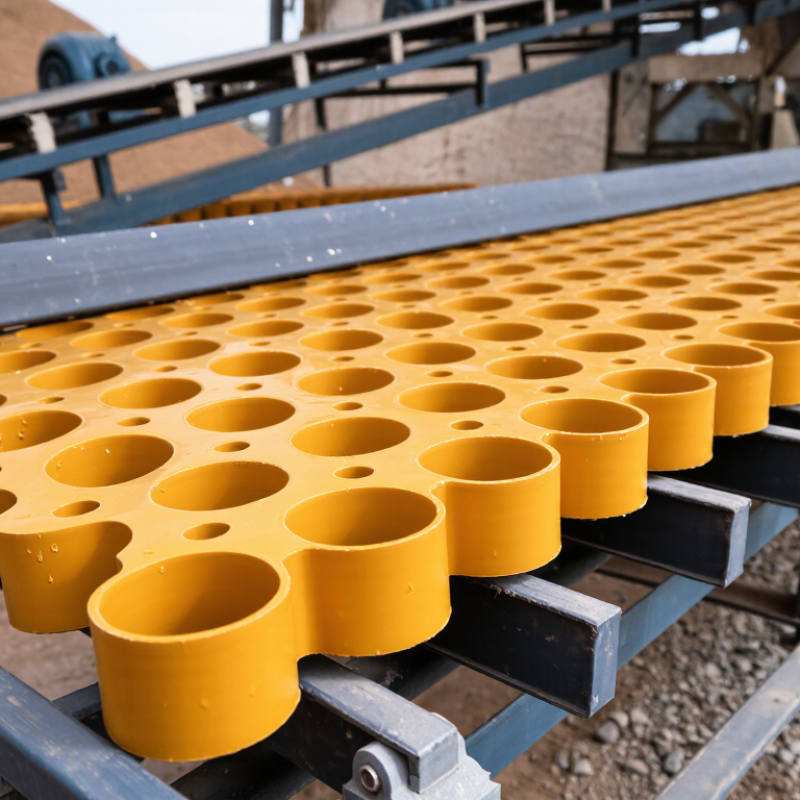
Urethane screen mesh is a screening surface made from cast polyurethane. It contains precise openings for separating stone, sand, coal, or recycled materials. Unlike woven steel, it flexes under vibration and resists many abrasive impacts.

The working principle is practical. A vibrating deck moves the material across the panel. Smaller particles pass through the apertures, while larger particles continue forward. Elastic urethane reduces blinding when damp material sticks to the surface. It also lowers noise in enclosed plants. Field experience shows that correct tension and aperture shape matter more than material claims alone.

USGS Mineral Commodity Summaries 2025 estimated U.S. crushed stone production at about 1.5 billion metric tons in 2024. Such volume exposes small design mistakes quickly. UNEP’s Global Resources Outlook 2024 reported that global resource extraction could rise by 60% by 2060. Longer-lasting screening surfaces may therefore reduce replacement waste and maintenance interruptions.

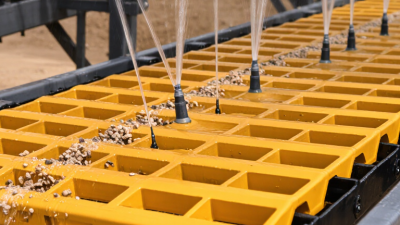
Still, urethane is not always the best choice. Very fine, wet material can clog poorly designed openings. Excessive heat, sharp impact, or chemical exposure may also shorten service life. Buyers should check feed size, moisture, vibration frequency, panel support, and operating temperature. A sample trial is wiser than relying on a catalog value.

2026 Best Urethane Screen Mesh for Global Buyers

What Is Urethane Screen Mesh and How Does It Work?

Urethane screen mesh is a flexible screening panel made from wear-resistant polyurethane. It separates bulk materials by aperture size: particles smaller than the openings pass through, while larger particles remain on the screening surface. The chart shows typical aperture sizes commonly selected for aggregate, sand, gravel, and mineral screening applications. Smaller apertures provide finer classification, while larger apertures support higher material flow.

Key Types of Urethane Screen Mesh for Different Screening Needs

2026 Best Urethane Screen Mesh for Global Buyers

Key Types of Urethane Screen Mesh for Different Screening Needs

Urethane screen mesh is not one universal product. Its design should follow feed size, moisture, abrasion, and screening duty. The U.S. Geological Survey’s Mineral Commodity Summaries 2025 estimated 2024 U.S. crushed stone output at about 1.5 billion metric tons. Sand and gravel production reached roughly 960 million metric tons. These volumes show why durable screening media matter in aggregate plants.

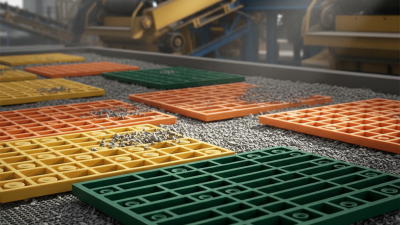
Tensioned urethane panels suit high-impact applications with heavy rock feed. Modular snap-in panels offer faster replacement and flexible aperture layouts. Dewatering panels use narrow slots to remove water from sand and fine aggregates. Trommel panels need strong backing and wear resistance under continuous rotation. Fine-aperture panels can improve separation, but they may blind when feed moisture rises. ISO 17827-1 provides a recognized basis for particle-size testing by sieving, supporting more consistent mesh evaluation. Field conditions still change the result.

Tips: Match the open area with the feed moisture. Measure actual wear after several shifts. A larger aperture is not always better. Ask for hardness, slot tolerance, panel dimensions, and test data. The first selection is rarely perfect. Slightly uneven feed can expose weaknesses that laboratory tests miss.

How to Evaluate Mesh Performance, Durability, and Compatibility

2026 Best Urethane Screen Mesh for Global Buyers

How to Evaluate Mesh Performance, Durability, and Compatibility

Urethane screen mesh should be evaluated against the actual feed, not only its catalog opening. The 2024 U.S. Geological Survey Mineral Commodity Summaries reports about 2.5 billion metric tons of global iron ore production in 2023. That volume explains why small screening losses can become costly.

Begin with aperture accuracy, open area, and panel tension. Measure the cut size using a calibrated sample, especially when particles contain clay or moisture. A 10-millimeter opening may perform differently after stretching, temperature changes, or blocked apertures. Check hardness, tear strength, abrasion resistance, and operating temperature. Test results should reference recognized laboratory methods, not vague claims.

Durability depends on contact conditions. Sharp rock can damage edges first. Fine wet material can blind the surface. Inspect fastening holes, support bars, and panel joints after several shifts. Compatibility also includes deck dimensions, clamp systems, feed rate, and vibration amplitude. The World Mining Data 2024 report places annual global mineral production near 18 billion tonnes, so operating environments vary widely.

Do not trust one number.

A useful trial compares throughput, oversize carryover, blinding, and panel wear over the same operating period. Experienced technicians often record photographs beside a ruler, because visual estimates can mislead. One imperfect point remains: laboratory abrasion results may not predict field life perfectly. Dust, impact angle, and maintenance habits can change everything. A small pilot test is usually safer than a large purchase.

Global Buying Guide: Sizes, Standards, Suppliers, and Shipping Factors

For global buyers, the best urethane screen mesh is matched to material, moisture, and feed size. Hard, abrasive stone usually needs high-wear polyurethane panels. Wet aggregate may require larger apertures and stronger tension control. Measure the opening, panel length, fixing system, and deck angle before requesting prices. Small errors can reduce throughput.

Use supplier drawings, material certificates, and documented aperture tolerances. ISO 17827-2 provides useful guidance for particle-size analysis, but it does not replace a product-specific screening test. Ask for Shore hardness, tensile strength, temperature limits, and test conditions. A reported wear-life figure means little without comparable feed data. That is often overlooked.

Supplier selection should include production capacity, inspection records, spare-panel availability, and export experience. Request samples from the same production batch when possible. Shipping also affects the real cost. UNCTAD’s Review of Maritime Transport 2024 reported continued growth in seaborne trade, while route disruptions increased schedule and freight uncertainty. For 2026 purchases, compare packed volume, container loading, port fees, insurance, and customs documents. Flat-packed panels may reduce freight space, but incorrect stacking can cause distortion. I would not trust the cheapest quotation without checking lead time and replacement support. Pricing is only one part.

Maintenance, Replacement, and Safe Use of Urethane Screen Mesh

For global buyers, the best urethane screen mesh is not defined by price alone. Maintenance, replacement, and safe use determine its working value.

Inspect the mesh before each shift. Look for tears, stretched openings, loose tension, and trapped abrasive particles. A quick visual check can prevent uneven screening. Clean the surface with water and a soft brush when suitable. Avoid sharp tools, aggressive solvents, and high heat, which may weaken urethane. Follow the manufacturer’s temperature and chemical resistance data.

Replace the mesh when openings become distorted or fastening points show permanent damage. Do not wait for complete failure. Confirm the replacement size, tension range, panel shape, and material compatibility with the screening equipment. Keep purchase records, inspection dates, and batch details for reliable traceability. This helps buyers compare performance across different operating sites.

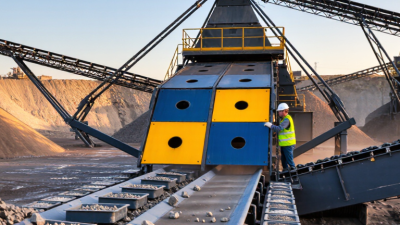
Lock out the machine before installation or removal. Wear cut-resistant gloves, eye protection, and safety footwear. Check clamps and support bars before restarting. Start at low feed capacity, then increase gradually while watching vibration and product flow. In my experience, operators sometimes over-tension new mesh to improve output. That decision often shortens service life. A perfect checklist does not exist. Dust, moisture, and feed shape can change actual results, so maintenance records should be reviewed and adjusted regularly.

2026 Best Urethane Screen Mesh for Global Buyers - Maintenance, Replacement, and Safe Use of Urethane Screen Mesh

The following specifications represent typical ranges for industrial polyurethane screen mesh. Actual performance depends on material formulation, aperture design, feed characteristics, temperature, installation, and operating conditions.

Screen Mesh Category Typical Aperture Typical Panel Thickness Typical Hardness Suitable Screening Duty Main Performance Benefit
Fine screening 0.15–3 mm 6–12 mm 85–95 Shore A Dewatering, classification, fine aggregate, sand, and mineral fines Reduced blinding and good resistance to wet, sticky feed
Medium screening 3–13 mm 8–20 mm 85–95 Shore A Sand, gravel, crushed stone, coal, and industrial minerals Balanced wear life, noise reduction, and screening efficiency
Coarse screening 13–100 mm 10–40 mm 85–95 Shore A Large aggregate, quarry feed, recycling material, and heavy scalping High impact tolerance and resistance to abrasive materials
Heavy-duty modular panels 25–150 mm 20–50 mm 85–95 Shore A High-impact rock, demolition waste, and primary screening Strong impact absorption and long wear potential under heavy loading

Material and Operating Data

Data Dimension Typical Value or Range Practical Selection Guidance
Base material Cast or molded polyurethane elastomer Choose a formulation intended for abrasion, impact, wet screening, or chemical exposure as required.
Hardness Approximately 85–95 Shore A Softer grades can improve impact absorption; harder grades can support dimensional stability and cutting resistance.
Continuous operating temperature Approximately −40°C to +80°C Confirm the supplier’s temperature rating before using the mesh with hot feed, steam, or heated wash water.
Short-term temperature exposure Up to approximately +100°C for selected formulations Do not assume all polyurethane panels have the same short-term temperature capability.
Tensile strength Typically 30–50 MPa Use the manufacturer’s test certificate when mechanical strength is a critical purchasing requirement.
Elongation at break Typically 300–600% Higher elasticity generally helps the panel tolerate impact and flexing, but does not replace correct support design.
Chemical compatibility Generally good with water, dilute acids, salts, and many mineral slurries Check compatibility with concentrated acids, strong alkalis, solvents, oils, and oxidizing chemicals before use.
Noise reduction Usually quieter than steel screening surfaces Actual noise reduction depends on feed size, impact energy, machine speed, panel tension, and support structure.

Maintenance, Replacement, and Safe Use Checklist

Management Area Recommended Practice Action Frequency or Trigger Reason
Initial inspection Check aperture size, panel seating, support bars, clamps, wedges, and fasteners before starting the machine. Before first use and after every installation Prevents early damage caused by incorrect fit, loose components, or unsupported areas.
Routine visual inspection Look for cuts, tears, enlarged apertures, exposed support parts, hardening, swelling, and abnormal wear. At least once per shift or according to site risk assessment Early detection reduces unplanned shutdowns and prevents material bypass.
Cleaning Remove packed material using approved water pressure or soft tools; avoid sharp metal tools that can cut the polyurethane. When blinding or pegging reduces screening performance Maintains open area and reduces unnecessary loading on the panel.
Fastener and support check Verify that clamps, wedges, rails, and support beams remain tight, aligned, and free of excessive wear. Weekly or more frequently under high-impact duty Poor support can cause flex fatigue, tearing, noise, and premature replacement.
Aperture wear measurement Measure representative openings and compare them with the required product-size tolerance. During scheduled inspections and whenever product quality changes Oversized openings can increase contamination and reduce separation accuracy.
Replacement criteria Replace panels with through-tears, missing sections, exposed metal supports, permanently enlarged openings, or severe deformation. Immediately when structural integrity or product quality is affected Damaged panels can create safety hazards and unstable screening results.
Safe isolation Stop the screen, isolate all energy sources, apply lockout/tagout, and verify zero movement before inspection or replacement. Every time personnel enter the equipment or handle panels Prevents entanglement, unexpected movement, and stored-energy injuries.
Personal protective equipment Use safety glasses, cut-resistant gloves, safety footwear, hearing protection, and respiratory protection where dust is present. During inspection, cleaning, handling, and replacement Reduces exposure to sharp edges, falling material, noise, and airborne dust.
Storage of replacement panels Store flat or fully supported in a cool, dry, shaded area away from ozone sources, solvents, oils, and direct sunlight. Throughout storage Protects the elastomer from distortion, oxidation, ultraviolet exposure, and chemical damage.

Note: Dimensions, service temperature, hardness, strength, and chemical resistance must be confirmed against the supplier’s technical data sheet and the specific screening machine design before purchase or installation.