Leave Your Message

How to Choose the Right Fine Mesh for Your Needs

Choosing the right Fine Mesh begins with the job it must perform, not the product label. A screen that looks suitable in a catalog may clog quickly, let valuable material pass, or slow production. The details matter: particle size, wire diameter, open area, material, and the conditions around the mesh. A damp powder, for example, may behave very differently from a dry one. Small differences can change the result.

There is no verified source material here for a named Fine Mesh industry expert’s quotation. I won’t invent an expert or attribute made-up words to a real person. A useful selection principle is: “Match the mesh opening to the task, then test it under real working conditions.” Treat that as practical guidance, not a sourced quotation. It also leaves room for an uncomfortable truth: specifications alone cannot predict every failure. Dust buildup, vibration, cleaning methods, and wear can all change performance.

This guide will help you compare mesh openings, materials, weave types, and application needs. You’ll see what to check before purchasing and when a sample test is worth the extra time. Bring actual material, not just a product sheet. Observe flow, separation, and cleaning after repeated use. A careful choice may take longer. It can still prevent costly rework.

How to Choose the Right Fine Mesh for Your Needs

What Fine Mesh Is and How Its Opening Size Is Measured

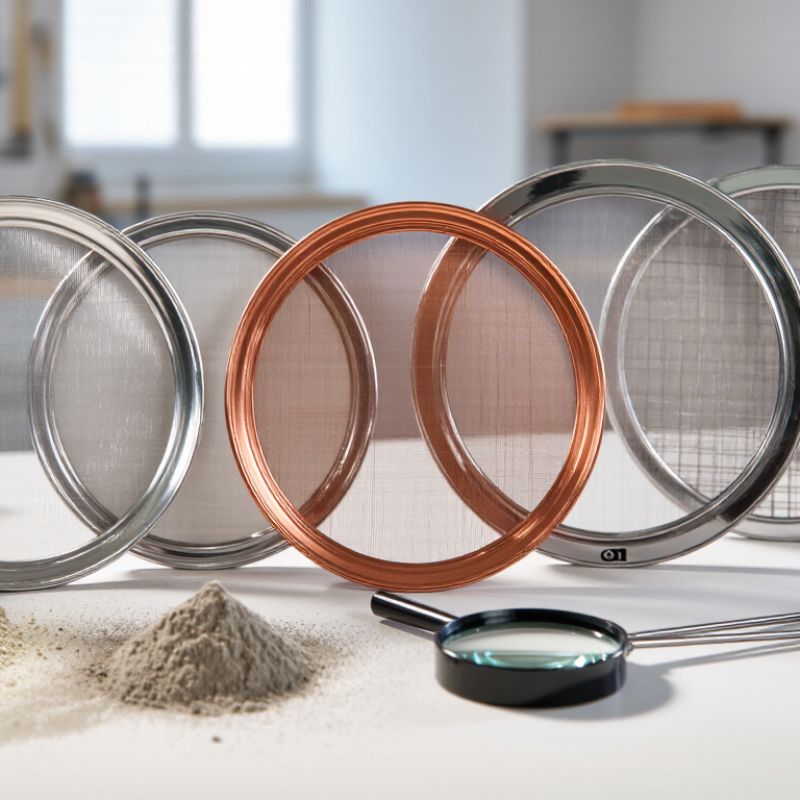
Fine mesh describes a screen with small openings, but “fine” has no universal cutoff. In practical purchasing, the clear opening matters more than the label. Mesh count means the number of openings per linear inch; wire thickness changes the space left between them. Two screens with the same mesh count can therefore retain different particles. Measure the opening, not just the count.

ASTM E11 specifies test-sieve openings and tolerances. Its standard series includes a No. 100 sieve with a nominal 150-micrometre opening and a No. 200 sieve with a 75-micrometre opening. ISO 3310-1 also sets requirements for woven-wire test sieves, including aperture dimensions and inspection. These standards help make comparisons repeatable.

In a workshop, measure a clean, undamaged sample with suitable optical equipment, or check the supplier’s certified aperture data. A ruler will not resolve these openings. Check the wire, too. Wear, blocked openings, and uneven tension can affect separation.

I have seen “micron” descriptions used loosely; the label alone is not proof of a measured aperture. That detail is easy to overlook.

How to Define the Mesh’s Intended Use and Operating Conditions

Before choosing a fine mesh, define what it must do. Is it screening particles, supporting a material, or protecting a downstream component? Estimate the smallest particle that must be retained, then consider how much flow or airflow the process requires. A mesh with very small openings may improve capture but restrict flow. There is a trade-off.

Describe the operating conditions in practical terms. Note the fluid or material, temperature range, pressure, and exposure to moisture or chemicals. Include cleaning methods and how often the mesh will be inspected. In a workshop, dust can collect in the corners of a screen; in a wet process, residue may cling to the wires. These details affect service life as much as the opening size. Measure the available frame or housing, too.

Consider vibration, impact, and the force used during cleaning. A delicate screen may deform under repeated handling, even when its opening size looks ideal on paper. I would test a small sample under real conditions when possible. Observe flow, particle buildup, and wear after several operating cycles. One test may not reveal every failure point, but it can expose assumptions worth revisiting. Keep notes on changes in temperature, material consistency, and cleaning frequency, since actual conditions rarely stay perfectly steady.

How to Match Mesh Count and Aperture to Filtration Needs

Mesh count shows openings per linear inch, but it does not tell the whole filtration story. Two screens with the same count can have different apertures because their wires differ in thickness. The aperture is the clear space particles must pass through. Start with the particle size you need to retain, then compare it with the stated opening size, not mesh count alone.

Flow matters too. A finer opening can catch smaller particles, yet it may slow liquid, trap debris quickly, or require more frequent cleaning. Thick fluids and dusty mixtures often need more open area than clean, low-viscosity liquids. That trade-off is easy to miss. Check the aperture data and confirm whether the figures are nominal or tightly controlled. A small trial can reveal clogging that a chart cannot predict.

Choose a mesh that meets the separation target while preserving workable flow. If particles vary widely, consider whether one screen can do the job or whether staged filtration is more practical. A trial may still surprise you.

How to Choose Mesh Material, Weave, and Construction

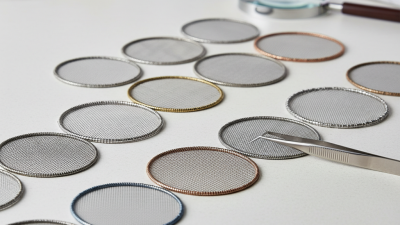
Fine mesh performs best when its material suits the conditions around it. Stainless steel tolerates heat and repeated cleaning, but it can be heavy and harder to shape around tight corners. Polyester resists rust in damp settings, while nylon is flexible but may stretch or soften at higher temperatures. Check exposure to sunlight, chemicals, and abrasion. Small details matter.

Weave determines how openings behave under load. Plain weave has a regular, stable pattern suited to many screening tasks. Twill weave can offer more flexibility and strength when finer openings are needed, though it may be harder to inspect. Compare the clear opening size with the wire or thread diameter, not just the mesh count. A finer opening is not automatically better; it may restrict airflow or clog sooner. There is a judgment call here.

Construction affects how long the mesh stays usable. Look for even tension, secure edges, and joints without loose strands or sharp burrs. For a framed panel, check that the mesh is supported evenly rather than pulled tight at just a few points. I would test a small sample under the expected cleaning and operating conditions. Specifications help, but real conditions can surprise you.

How to Check Durability, Compatibility, and Maintenance Requirements

Fine mesh can look sturdy on a sample roll, but real performance depends on the job. Check the wire or fiber material, weave, and edge finish. For dusty work, a small tear can quickly reduce screening accuracy. Gently flex a sample and inspect the joints. Look for loose strands, uneven openings, or sharp edges. This is not a laboratory test, but it can reveal obvious weaknesses.

Compatibility matters just as much. Measure the frame opening and compare it with the mesh’s actual aperture and thickness. A mesh that is too tight may buckle; one that is loose can sag and trap material. Consider heat, moisture, cleaning chemicals, and contact with the material being screened. If conditions are uncertain, test a small piece first. It may feel overly cautious, but replacement is rarely convenient.

Think about maintenance before installation. Fine openings can clog with damp or sticky debris, so ask whether the mesh can be brushed, rinsed, or removed safely. Check the supplier’s care guidance rather than assuming every material tolerates the same cleaner. Inspect high-wear areas regularly, especially corners and fastening points. Keep a simple log of cleaning and visible damage. Not glamorous. Useful. A mesh that cleans easily may serve better than a finer option that needs constant attention.

How to Choose the Right Fine Mesh for Your Needs: How to Check Durability, Compatibility, and Maintenance Requirements

Mesh Material Typical Strengths and Uses Durability Considerations Compatibility Checks Maintenance Requirements What to Confirm Before Buying
304 stainless steel General-purpose screening, sieving, guards, and filtration in indoor or mildly corrosive environments. Good mechanical strength and corrosion resistance in many ordinary conditions. It can pit or corrode in chloride-rich or strongly corrosive environments. Check exposure to salts, chlorides, cleaning chemicals, temperature, and contact with dissimilar metals. Remove trapped particles with a soft brush or suitable rinse. Use a cleaner compatible with stainless steel and the process. Confirm wire diameter, opening size, weave, edge finish, and whether the operating environment contains chlorides.
316 stainless steel Marine, coastal, chemical-processing, and other applications where greater corrosion resistance than 304 may be needed. Often performs better than 304 in chloride-containing environments, but it is not immune to corrosion in every concentration, temperature, or chemical exposure. Verify the exact chemical composition, concentration, temperature, and exposure time with a materials compatibility reference or qualified supplier. Rinse off salt or process residue when appropriate; inspect for pitting, deposits, and damaged wires. Check whether the additional corrosion resistance is justified and confirm that the specified grade is suitable for the actual service conditions.
Nylon (polyamide) Lightweight screens, liquid or air filtration, and applications needing a flexible synthetic mesh. Can be susceptible to moisture absorption, dimensional change, heat, ultraviolet exposure, and some chemicals; performance depends on the nylon type and construction. Check chemical exposure, operating temperature, UV exposure, and whether moisture-related swelling could affect fit or aperture. Clean with a compatible detergent or rinse. Avoid excessive heat, harsh chemicals, and abrasive tools unless approved for the specific mesh. Ask for the polymer grade, temperature limits, chemical-resistance information, and aperture tolerance under operating conditions.
Polyester Industrial screening and filtration where a flexible synthetic fabric and good dimensional stability are useful. Often resists moisture-related dimensional change better than nylon, but heat, UV exposure, abrasion, and chemicals can still reduce service life. Confirm compatibility with the process fluid, cleaning agents, temperature, and any outdoor exposure. Use a compatible rinse or mild cleaning method; inspect for fraying, stretched areas, and blocked openings. Check polymer grade, weave, tensile requirements, opening size, and suitability for repeated cleaning or tensioning.
Brass Fine sieves, decorative screens, and some low-corrosion indoor applications where a conductive metal mesh is acceptable. Can tarnish and may be vulnerable to corrosion or dezincification in certain waters and chemical environments. It is generally less suitable than stainless steel for many harsh services. Check contact with acids, ammonia-containing cleaners, water chemistry, and any requirements for non-sparking or electrical conductivity. Clean gently with a material-compatible product; avoid abrasive polishing that can remove or thin the wires. Confirm alloy composition, corrosion exposure, mechanical loading, and whether discoloration is acceptable.
Galvanized steel Economical screening and guards for relatively dry, non-aggressive environments. Corrosion protection depends on the zinc coating. Cutting, abrasion, or coating damage can expose the steel and lead to rust; it is generally unsuitable for persistent wet or corrosive service. Check moisture, salt, chemicals, abrasion, and any contact with materials that could damage the coating. Inspect for rust, worn coating, and damaged cut edges. Clean without scraping or using harsh products that remove the zinc layer. Confirm coating condition, edge protection, exposure conditions, and whether a more corrosion-resistant material is required.

Selection note: Mesh count alone does not specify the clear opening. Opening size depends on both mesh count and wire diameter, and actual tolerances vary by weave and manufacturing method. Match the opening, strength, flow needs, and cleaning method to the application, and verify the supplier’s specifications before ordering.