Top Iron Ore Screening Techniques for Global Buyers?
When it comes to sourcing iron ore, effective screening techniques play a vital role. Iron ore screening is essential for ensuring the quality of mineral products. Buyers globally need to understand the various methods available and how they cater to specific requirements.
Different screening techniques offer unique advantages and challenges. For instance, vibrating screens are common but can be less efficient with fine materials. On the other hand, high-frequency screens provide better precision but may require additional maintenance. This awareness is crucial for buyers seeking reliable suppliers.
Global buyers must also consider the environmental impacts of their chosen screening methods. Sustainable practices are increasingly important in iron ore screening. Adjusting techniques to reduce waste is essential for long-term success. Embracing new technologies could enhance processing efficiency, leading to better quality products. However, there is no one-size-fits-all solution. Each buyer needs to evaluate their specific needs while remaining open to innovation.
Overview of Iron Ore Screening Techniques
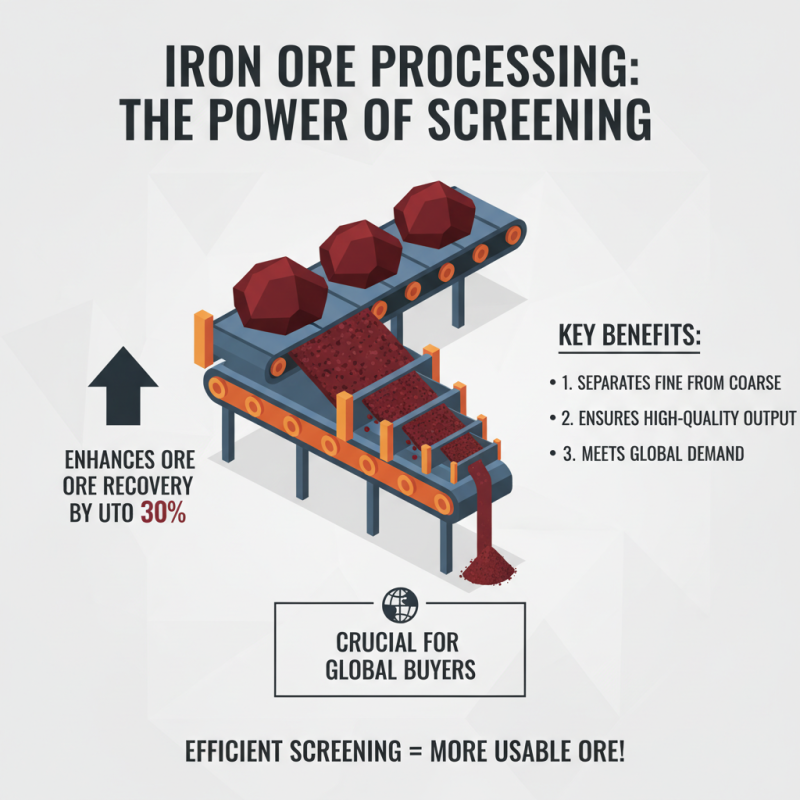
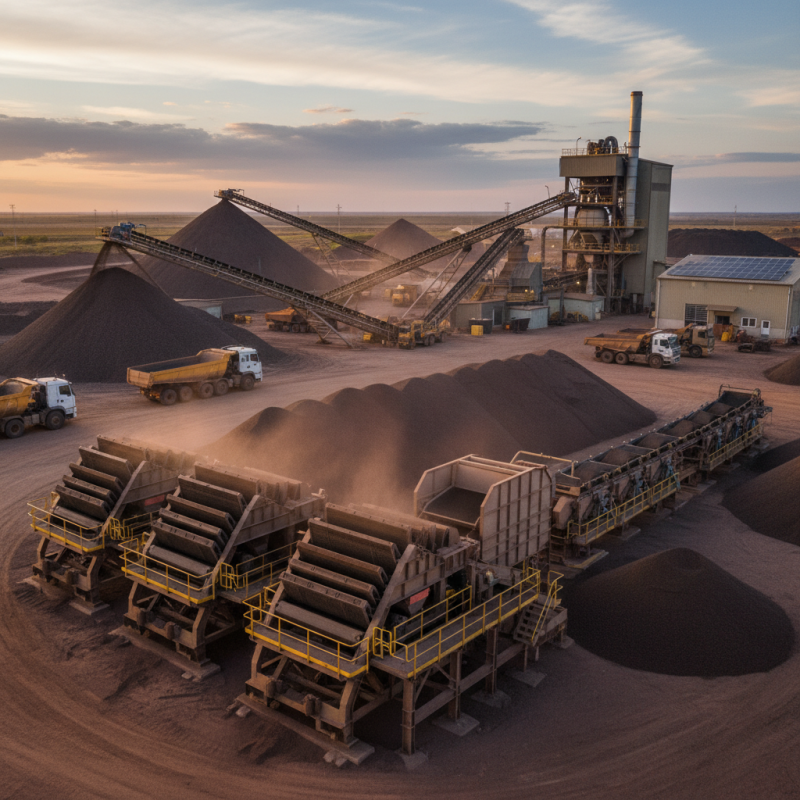
Iron ore screening is crucial in the mining industry. It separates fine materials from coarse ones, improving quality and efficiency. Different techniques serve various needs. Vibrating screens are widely used for their ability to process large volumes. They efficiently sort ore based on particle size.
Another technique is the trommel, a rotating cylindrical screen. This method is effective for removing impurities. The trommel has an advantage in managing varying feed sizes, making it a versatile choice. However, its operational cost can be higher. Buyers should weigh these factors before deciding on a method.
Moreover, the use of air classifiers is growing. These devices separate materials based on density. While effective, they require precise calibration. This complexity can lead to challenges in operation. Understanding these techniques helps buyers make informed choices in the global iron ore market. Each method has its merits and drawbacks, highlighting the need for careful evaluation.
Importance of Screening in Iron Ore Processing
Screening plays a crucial role in iron ore processing, ensuring high-quality output for global buyers. It effectively separates fine particles from coarse material. A well-executed screening process can enhance ore recovery rates by up to 30%, according to industry reports. This efficiency is vital in meeting the increasing demand for iron ore.
The global iron ore market is expanding rapidly. With the demand projected to reach 2.5 billion tons by 2025, quality control becomes essential. Inadequate screening can lead to significant financial losses. Inefficient processes may cost mining companies millions in wasted resources and lower grades of ore. On the other hand, advanced screening techniques can help maintain product purity, ready for downstream processing.
However, not all screening methods yield the same results. Many operators face challenges in selecting the most suitable technology. Variability in ore types and processing conditions complicates decision-making. It's important to continually assess and optimize screening strategies. Without this reflection, opportunities for improvement may slip away. By focusing on refining screening processes, iron ore producers can better align with market demands.
Common Screening Methods Used Globally
Iron ore screening plays a crucial role in the global supply chain. Effective screening methods ensure that high-quality ore reaches buyers. Different techniques are employed across the globe for this purpose.
One widely used method is dry screening. This technique separates particles based on size without using water. Dry screening can be cost-effective. However, it struggles with fine particles, which can lead to a loss of valuable ore. Wet screening is another common technique. This method uses water to separate ore by size and density. It is effective for fine materials. Yet, it requires large amounts of water, which can be a challenge in arid regions.
Advanced technologies like vibrating screens and trommel screens are gaining popularity. These devices enhance efficiency and accuracy. However, their initial cost can be high. They also require regular maintenance. This may deter smaller operations. Ultimately, choosing the right screening method depends on ore characteristics and environmental conditions. Continuous evaluation and adaptation are essential for optimal results.
Global Iron Ore Screening Techniques
This chart illustrates the popularity of various iron ore screening techniques used globally. Vibrating screens lead the preference, followed by oscillating and rotary screens. Understanding these methods can help buyers make informed decisions on sourcing.
Technological Advancements in Iron Ore Screening
Iron ore screening is critical in the mining industry. The process helps in separating valuable iron from impurities. Recent technological advancements are revolutionizing these techniques. Automation and digital analytics improve efficiency. New screening methods provide better precision in sorting ore. They also reduce operational costs and environmental impact.
Adopting advanced screening technology can be a game changer. However, it is essential to consider the scalability of these tools. Not every solution fits all operations. Buyers must evaluate their specific needs and site conditions. Trying new technologies requires careful planning. Testing in controlled environments is wise before full implementation.
Tips for seamless integration include training staff effectively. Proper understanding of new systems can enhance productivity. Also, maintain an open line of communication among teams. Feedback helps in refining process steps. A willingness to adapt can lead to overall better performance. Remember, the goal is not just efficiency but sustainable growth.
Top Iron Ore Screening Techniques for Global Buyers
| Technique |
Description |
Advantages |
Typical Application |
| Vibrating Screens |
Employs vibration to separate materials based on size. |
High efficiency, effective for wet and dry materials. |
Used in primary screening of iron ore. |
| High-Pressure Grinding Rolls (HPGR) |
Crushes ores under high pressure for finer particles. |
Reduces energy consumption, enhances recovery rates. |
In secondary and tertiary crushing processes. |
| Dry Magnetic Separator |
Separates magnetic particles from non-magnetic ones. |
No water required, ideal for arid regions. |
Effective in removing impurities from ores. |
| Screening Buckets |
Attach to heavy machinery for on-site screening. |
Portability and versatility. |
Used in site preparation and recycling operations. |
| Hydraulic Classifiers |
Separates particles by density using hydraulic flow. |
Cost-effective and efficient for fine separations. |
Used in iron ore beneficiation processes. |
Best Practices for Buyers of Iron Ore Screening Equipment
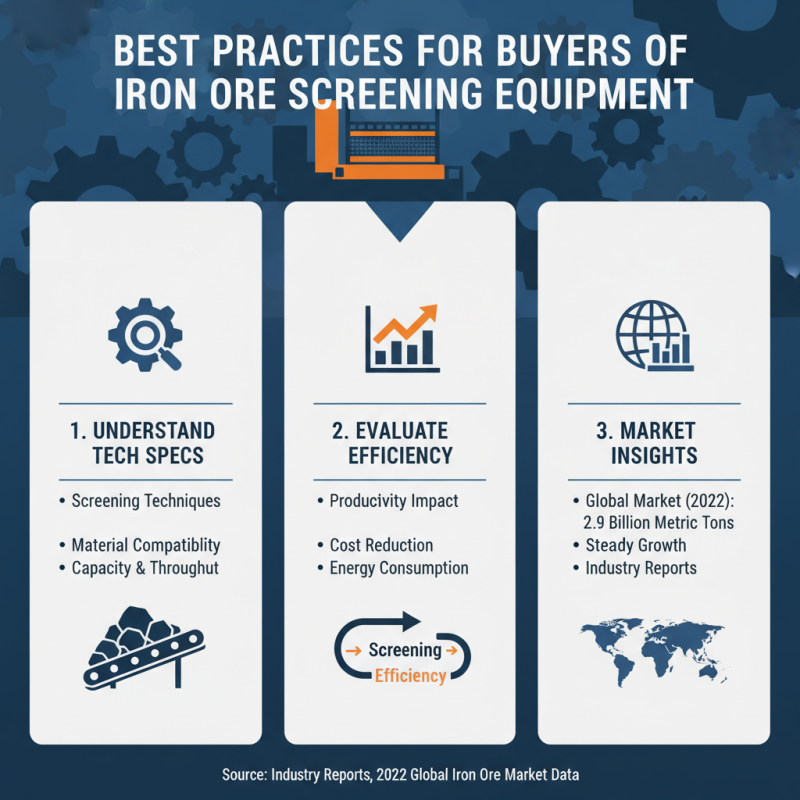
When selecting iron ore screening equipment, understanding technical specifications is crucial. According to industry reports, the global iron ore market has seen steady growth, reaching approximately 2.9 billion metric tons in 2022. Buyers need to evaluate the efficiency of screening techniques. This factor directly influences overall productivity and costs.
Consider the type of materials being processed. High-quality screening systems can effectively separate fine or large iron ore particles. For instance, using high-frequency screens can improve recovery rates by up to 15%. However, investing in advanced technology may require higher upfront costs.
Buyers should also pay attention to maintenance capabilities. Regular maintenance ensures longevity and optimal performance. A study indicated that poorly maintained screening equipment could lead to a 10% drop in operational efficiency. Thus, cost-effectiveness extends beyond initial purchases. Customers should reflect on total cost of ownership over time. An informed choice regarding screening techniques can yield better material quality and increased market competitiveness.
 No. 14, Building 2, No. 367 Beijing Road, Chengdu Economic and Technological Development Zone (Longquanyi District)