Leave Your Message

China Top PU Dehydrated Screen Manufacturers for Buyers

Choosing among China’s top PU Dehydrated Screen manufacturers takes more than comparing prices. Buyers need screens that match their material, moisture level, and operating conditions. A Pu Dehydrated Screen can support efficient water removal, but its performance depends on details such as panel dimensions, slot design, polyurethane quality, and installation fit. Small mismatches matter.

This guide looks at practical ways to assess suppliers. Ask for drawings, material specifications, production photos, and clear answers about wear life and replacement panels. If possible, review a sample against your existing screen frame before placing a large order. A factory’s quality records and inspection process can help, but neither replaces careful technical checks. Request information about tolerances, fastening methods, and expected maintenance needs. These are useful questions.

There is no single manufacturer that suits every plant. Feed characteristics, screen loading, and local service access can change the decision. A polished catalog may leave important gaps. That deserves a second look. Compare suppliers on documented capability, communication, customization, and delivery terms, not claims alone. Buyers should also clarify how defects or specification changes are handled. The process can feel slower than choosing the lowest quote, and sometimes the evidence remains incomplete. Still, a little skepticism helps prevent an expensive mismatch.

China Top PU Dehydrated Screen Manufacturers for Buyers

What PU Dewatering Screens Are and How They Work

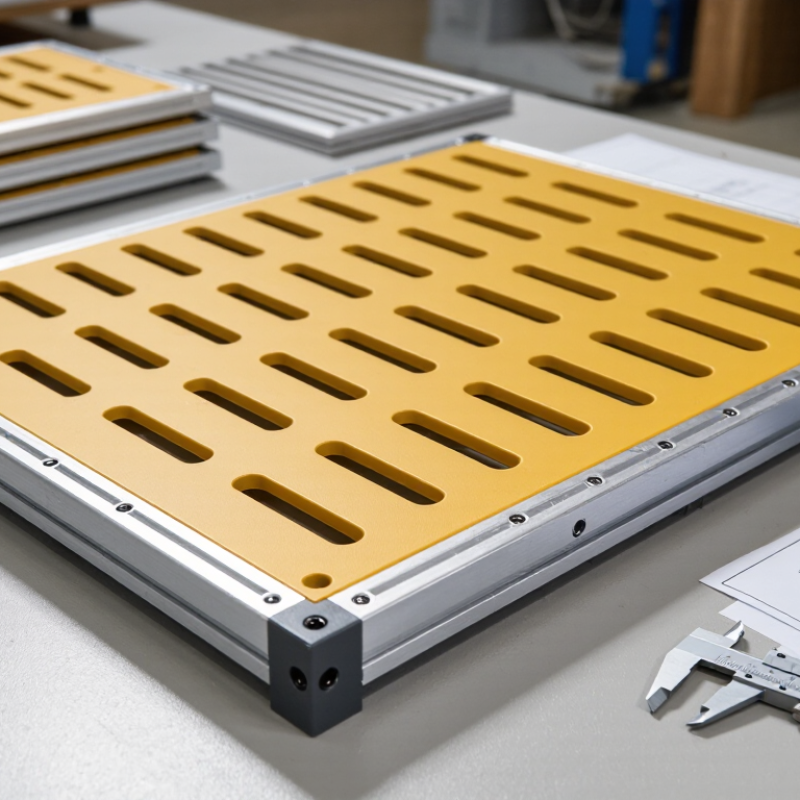
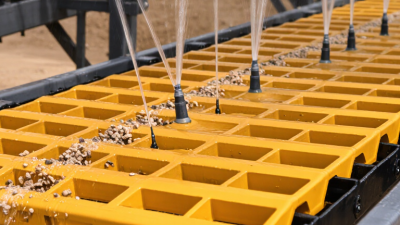
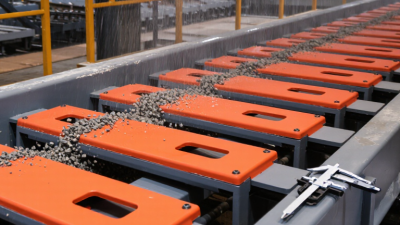
A PU dewatering screen uses polyurethane panels with narrow openings to separate water from solid material. In a vibrating screen, slurry spreads across the deck while motion carries solids toward the discharge end. Water passes through the apertures and drains below. The exact pattern depends on the screen design and the material being processed.

It is a simple process, but small details matter. Feed that arrives in a thick, uneven stream may leave wet patches on the deck. Aperture size affects both drainage and the amount of fine material that passes through. Too much vibration can also move solids off the screen before enough water drains. Not always.

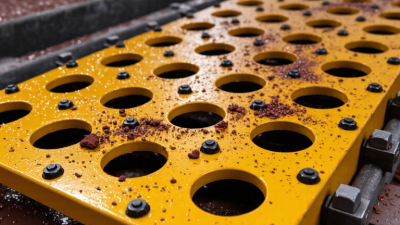
Polyurethane panels are valued for wear resistance and their ability to handle repeated impact. Their service life still depends on the feed, panel support, and operating conditions. During inspection, look for blocked openings, loose panels, and uneven wear, especially near the feed zone. A quick check after cleaning can reveal damage that is hard to spot under wet material.

One practical limitation is that no panel choice can compensate for poor feed distribution. Operators may need to adjust water flow, feed rate, or deck settings as the material changes. The right balance is often found through measured trials, not guesswork.

Key Features of Polyurethane Dewatering Screens

Polyurethane dewatering screens combine a resilient screening surface with openings designed to separate solids from water. Their flexibility can help absorb repeated impacts from wet, abrasive material, while the molded apertures support consistent sizing. In a plant, this matters when slurry lands unevenly or carries sharp mineral particles. A well-fitted panel can also reduce bypass around the edges. Fit matters.

A practical advantage is modular construction: worn sections can often be replaced without changing the entire deck. Polyurethane may resist abrasion and corrosion better than some conventional screen materials, but performance depends on feed conditions, aperture shape, and panel tension. It is not magic. Fine, sticky solids can still blind openings, especially when moisture and feed rate fluctuate.

Operators should check drainage, inspect panel edges for lifting, and compare wear across the deck. One weak point is easy to miss. A screen that looks intact may still have stretched or damaged apertures, affecting separation.

Choosing the right hardness and opening size requires matching the screen to the actual material, not just the equipment catalogue.

How to Evaluate Chinese PU Dewatering Screen Manufacturers

Evaluating Chinese PU dewatering screen manufacturers starts with your operating conditions, not a catalogue. Share the feed material, particle size, slurry concentration, throughput, and target moisture. Ask how the panel’s aperture, thickness, and drainage layout suit those details. A screen that performs well on one mineral may not suit another. Small differences matter.

Check how the manufacturer controls production. Ask about polyurethane hardness testing, dimensional checks, batch traceability, and inspection records. Request a sample panel or a drawing with tolerances before placing a large order. Discuss fastening method and panel fit, too; poor fit can cause movement and uneven wear. A neat brochure is not proof. If possible, speak with users handling similar materials and confirm their operating conditions. That evidence may still be incomplete, but it is more useful than broad performance claims.

Tips: Compare written specifications, not just price. Confirm lead time, packaging, spare-panel availability, and who handles technical questions after delivery. Keep one point in mind: even a careful review cannot predict every site condition. Ask what information the supplier needs to investigate a performance problem, and get the response in writing.

China Top PU Dewatering Screen Manufacturers for Buyers — How to Evaluate Chinese PU Dewatering Screen Manufacturers

Evaluation Dimension What to Check Evidence to Request Buyer Evaluation Guide Weight
Application and process understanding Whether the supplier asks about feed material, particle-size distribution, slurry density, feed rate, moisture target, and operating conditions before recommending a screen. Completed application questionnaire, proposed process arrangement, and written assumptions behind the selection. Prefer a proposal tailored to the duty rather than a standard panel recommendation without process details. 15%
Panel material and construction Polyurethane formulation, panel profile, aperture shape and size, panel dimensions, fastening method, and compatibility with the screen deck. Technical drawings, material and dimensional specifications, installation instructions, and a sample panel where practical. Confirm that the proposed panel matches the equipment and the required separation; do not compare aperture size alone. 15%
Performance validation How the supplier substantiates expected throughput, dewatering performance, separation efficiency, and service life for the stated application. Relevant operating references, trial or test results, and clearly stated feed conditions and measurement methods. Compare results only when feed material, operating conditions, and test methods are sufficiently similar. 15%
Quality control and traceability Inspection of incoming materials, molding and curing controls, dimensional checks, finished-product inspection, and batch identification. Quality-control procedures, inspection records, sample certificates, and an explanation of how nonconforming products are handled. Look for documented, repeatable checks rather than general claims of quality. 15%
Equipment fit and installation Compatibility with the screen model, deck layout, support bars, panel joints, and any required adapters or installation changes. Dimensioned drawings, fit confirmation, installation guidance, and a parts list for the proposed configuration. Verify critical dimensions against the existing deck before ordering; confirm responsibility for resolving fit issues. 10%
Product range and customization Ability to supply the required panel types, apertures, profiles, dimensions, and replacement components for the application. Product specifications, available customization options, tooling requirements, and written confirmation of the requested design. Check that custom features are documented and included in the quotation and production drawings. 10%
Delivery and export readiness Quoted production lead time, packing method, shipping terms, export documentation, and ability to protect panels during transport. Written delivery schedule, packing details, quotation with stated trade terms, and sample export documents where relevant. Compare total delivered cost and schedule, not just the unit price; confirm the named delivery point and included costs. 10%
Warranty and after-sales support Warranty scope, exclusions, claim process, replacement-part availability, technical response channels, and support for installation questions. Written warranty terms, service contact details, response expectations, and a documented procedure for handling claims. Clarify what counts as a defect and what evidence is required before placing an order. 10%

Suggested use: Score each candidate against the same evidence requirements, then multiply each dimension score by its weight. Performance and service-life figures depend on feed material, operating conditions, panel design, and maintenance; request application-specific evidence rather than relying on generic estimates.

Factors to Compare When Selecting a Supplier

Choosing a PU dehydrated screen supplier starts with the actual feed, not a catalogue image. Share the particle-size distribution, slurry conditions, target moisture, and operating hours. USGS estimated U.S. crushed-stone output at about 1.5 billion tons in 2023 (Mineral Commodity Summaries 2024). That scale makes dependable screening and practical maintenance important. Compare aperture accuracy, panel thickness, fastening design, and drainage performance against your plant’s requirements. Ask for test records or a trial panel using representative material. A neat brochure is not proof.

Check how the supplier supports installation and wear monitoring. Request clear tolerances, replacement lead times, and written warranty conditions. Ask how panels behave under your feed’s sharp particles and changing water flow; generic wear-life promises can mislead. Short trials help. Inspect for blocked apertures, uneven wear, and loose fittings, then discuss the findings with the supplier. One caveat: published capacity figures may use different feed and test conditions, so direct comparisons can be imperfect. Ask for the test setup behind each number, and keep your own operating records.

China PU Dewatering Screen Manufacturers: Supplier Selection Factors

Compare suppliers against your operating requirements, including panel fit and aperture, wear performance, open area, quality documentation, and technical support. Scores show an example buyer-priority scale from 1 (lower priority) to 5 (higher priority); they are not survey results or ratings of any manufacturer.

Purchasing, Customization, and Quality Considerations for Buyers

Buyers comparing China-based PU dewatering screen manufacturers should begin with operating conditions, not catalogue claims. Share the feed-size range, slurry characteristics, solids load, deck angle, and available panel dimensions. A clear drawing helps. Ask whether the supplier can adapt aperture shape, panel thickness, fixing points, and edge design to your screen deck. Small fitting errors can leave gaps where material builds up or water escapes.

Customization needs a practical trade-off. A smaller opening may improve separation, but it can also blind when feed contains sticky fines. Request a sample panel or a trial plan using representative material, if possible. Check aperture dimensions, panel thickness, molding consistency, and the fit of fastening holes. Ask for inspection records and batch identification, then confirm how defects are handled before ordering. Details matter. Compare quotations by service life assumptions, delivery schedule, spare-panel availability, and packaging—not unit price alone. It is easy to over-specify hardness or thickness without considering the machine and feed. That judgment deserves a second look. Clear technical communication is often more useful than a confident promise.