What Is Fine Mesh and How Do You Choose the Right Type?
Fine Mesh is not a single material or opening size. It describes closely spaced openings used to screen, separate, or protect products in applications such as food processing, water treatment, and mineral handling. The right choice depends on what must pass through, what must stay behind, and the conditions the mesh will face. That sounds simple. It often isn’t.
A useful technical reference is ASTM E11, which specifies test sieve openings; its No. 200 sieve has a nominal opening of 75 micrometres. This figure offers a clear comparison point, but it should not be treated as a universal specification for woven mesh. Wire diameter affects the actual opening, and two products with the same mesh count may perform differently. ISO 9044 also sets requirements for industrial woven wire cloth, including tolerances and inspection considerations. These standards help frame a purchase, not replace product testing.
Before selecting a type, define the target particle size, required flow rate, material compatibility, and cleaning method. Picture a damp powder meeting a fine screen: a smaller opening may improve separation, yet it can also clog faster and reduce throughput. A detail that looks minor on a drawing can matter on the production floor. Compare aperture size, wire diameter, weave, alloy, and operating temperature with supplier data. Ask for a sample or test report when the application is sensitive. Specifications are not perfect predictions. Real process conditions can surprise you.
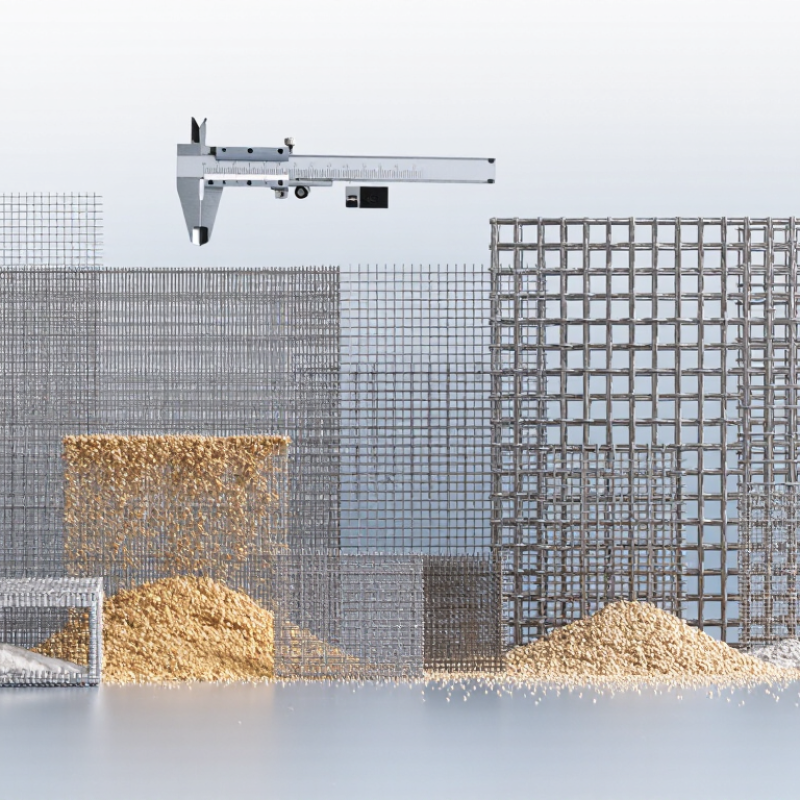
What Fine Mesh Is and How Its Openings Are Measured
Fine mesh describes a screen with small openings, but there is no single cutoff that defines “fine.” In woven wire mesh, the opening is the clear space between neighboring wires. Mesh count, by contrast, is the number of openings per linear inch. The number can mislead. A 100-mesh screen does not always have the same opening size, because thicker wire leaves less open space.
ASTM E11, a standard for test sieves, specifies nominal openings of 75 micrometres for No. 200 and 45 micrometres for No. 325. These figures help compare sieve sizes, but they do not describe every industrial mesh construction. For a particular screen, measure the opening itself with a calibrated microscope or suitable optical system, and check several locations. Wire variation, weave distortion, and measurement uncertainty can change the result. Small differences matter. When requesting mesh, state the opening size in micrometres, wire diameter, material, and applicable tolerance. Mesh count alone is an incomplete specification, even when it looks precise on a drawing.
How Fine Mesh Is Made and Which Materials Are Used
Fine mesh is usually made by drawing metal into thin, even wire, then weaving it on a precision loom. Each crossing sets the opening size. Plain weave alternates over and under; twill weave shifts the pattern, allowing tighter construction with fine wire. Some mesh is welded instead, especially when a stable grid matters more than a flexible weave. Synthetic mesh follows a different route: polymer filaments are extruded, woven, and sometimes heat-set. Small variations can affect flow and filtration.
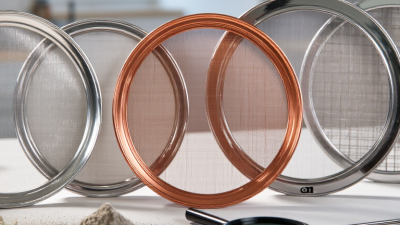
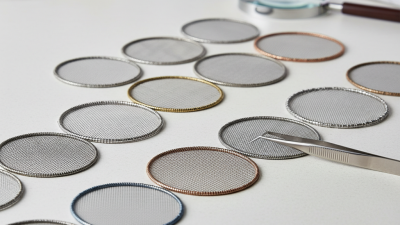
Stainless steel is chosen for strength and resistance to rust, while polyester and nylon are lightweight options for screening and filtration. Brass and copper are used where their conductivity or appearance is useful, but they may tarnish. No material suits every environment. Heat, moisture, chemicals, and cleaning methods can change performance, so check the maker’s specifications rather than relying on the mesh count alone. A high count does not automatically mean a better filter.
Tips: Match the opening size to the particles you need to retain, then check wire diameter and open area. Ask for a sample if the mesh will face abrasion or repeated washing. It is easy to overlook edge finishing, yet frayed or sharp edges can make installation awkward.
Where Fine Mesh Is Commonly Used
Fine mesh appears wherever small particles must be retained, separated, or screened out. In water treatment, screen elements can catch leaves, grit, and other debris before finer filtration stages. Food processors use mesh baskets and screens to drain, rinse, or grade ingredients such as seeds and granules. Laboratories also rely on precise openings when preparing samples. Small openings matter.
Mining uses screening at several points to sort crushed material by particle size. The U.S. Geological Survey’s Mineral Commodity Summaries 2024 reported global copper mine production of about 22 million metric tons in 2023. That figure reflects the scale of mineral processing, not mesh consumption, but it helps explain why durable screening equipment matters. Fine mesh may also clog quickly when material is damp or sticky.
The U.S. Environmental Protection Agency’s 2023 Drinking Water Infrastructure Needs Survey and Assessment estimated $625 billion in drinking-water infrastructure needs over 20 years. Fine screens are only one small part of these systems. Choosing them calls for more than counting openings: wire diameter, material, flow rate, and cleaning access all affect performance. A screen that looks suitably fine may restrict flow in practice. Testing it with the actual material is wiser than trusting a specification sheet alone.
Fine Mesh: Aperture Sizes in Common Screening Uses
Representative sieve openings, from coarser screening to finer particle separation
Smaller openings capture finer particles but can reduce flow and clog more easily. Aperture values shown are standard ASTM E11 sieve openings; the best mesh depends on the material and process.
Which Properties Affect Fine Mesh Performance
Fine mesh performance depends on aperture size, wire diameter, weave, material, and tension. A smaller opening can capture finer particles, but it may also reduce flow and clog sooner. ISO 9044:2016 covers industrial woven wire cloth with nominal apertures from 0.02 to 16 mm, showing how wide the design range can be. ASTM E11-22 includes test-sieve openings down to 20 μm. These standards provide useful reference points, but a stated opening alone does not predict performance in a working process.
Open area—the portion of the mesh available for flow—changes with both aperture and wire thickness. Thicker wire can improve strength, yet it blocks more of the surface. Weave matters too: plain weave offers a regular grid, while other patterns can alter stability and particle passage. Material selection should reflect the fluid, temperature, and cleaning method; corrosion or abrasion can gradually change the openings. Small details matter. A mesh that works well with dry, free-flowing powder may blind quickly when particles are damp or irregular.
For a practical check, compare the mesh’s nominal aperture and wire diameter, then test it with the actual feed under realistic flow conditions. Record throughput, retained material, and cleaning frequency. I would not rely on mesh count alone; it can conceal differences in wire thickness and open area. Even a short trial may reveal a trade-off the specification sheet misses.
How to Choose the Right Fine Mesh for Your Needs
Choosing fine mesh starts with the particle size you need to retain, not the mesh number alone. Wire thickness changes the open area, so two screens with the same mesh count can pass material differently. Measure your particles, then compare the required opening with a recognized sieve size. Small details matter.
ASTM E11-22 lists a nominal opening of 75 μm for a No. 200 test sieve and 150 μm for No. 100. ISO 3310-1:2016 covers woven-wire test sieves with nominal apertures from 20 μm to 125 mm. These standards provide useful reference points, but a production screen may behave differently from a laboratory sieve. Check the supplier’s stated aperture and wire diameter.
Next, match the mesh to the job. For flour or powder, consider blinding, moisture, and how quickly material must pass. For a liquid filter, check pressure, corrosion resistance, and cleaning method. A finer opening can improve separation, but it may reduce flow and clog sooner. Test a small sample under real operating conditions. That takes time. It can also reveal a mismatch that a specification sheet misses. I’d be cautious about choosing by mesh count alone; it is an easy shortcut, and not always a good one.
 No. 14, Building 2, No. 367 Beijing Road, Chengdu Economic and Technological Development Zone (Longquanyi District)